Certified Arborist Consultation for Ethical, Standards-Based Tree Care
A mature tree can add shade, structure, privacy, and value to a property for decades. It can also become the most technically demanding living asset on the site. The challenge is not simply deciding whether a tree looks healthy. It is deciding what level of intervention is justified, what level of risk is acceptable, and what work should happen now versus later. That is where a Certified Arborist Consultation matters.
The phrase gets used casually in marketing, but the value of a true arborist consultation is not a sales pitch for cutting, trimming, or removal. It is a disciplined assessment grounded in the art and science of tree care, guided by professional standards, ongoing education, and ethics. When that process is done well, the result is often more nuanced than property owners expect. Sometimes the right recommendation is prompt removal. Sometimes it is targeted pruning. Sometimes it is structural support. Sometimes it is watchful waiting with a clear monitoring plan. And sometimes the most ethical answer is that no work is needed right now.
That distinction matters because tree work can be dangerous. Large-tree pruning and removal are not casual yard tasks. They require trained people, proper equipment, and judgment under changing conditions. A consultation by a credentialed professional helps separate necessary work from unnecessary disturbance, and urgent hazards from manageable concerns.
What certification adds to a consultation
An ISA Certified Arborist is trained in the art and science of tree care, has passed a comprehensive exam, continues education to maintain certification, and is bound by a Code of Ethics. Those points are not just resume language. They shape how an arborist approaches a property and the recommendations that follow.
A standards-based consultation starts from a simple premise: trees are biological organisms in a built environment, and both sides of that equation matter. A tree may be biologically vigorous and still be poorly suited to its location. Another may be stressed or structurally imperfect yet retainable with reasonable mitigation. Certification does not eliminate uncertainty, but it creates a framework for making defensible decisions.
That framework is especially important when emotions run high. Homeowners often call after a storm, after noticing a large crack, or after a neighbor comments that a tree “looks dangerous.” On the other end of the spectrum, some clients delay action for years because a tree is tied to family memories or long-established landscape character. An ethical arborist has to work inside both realities, respecting the owner’s goals without letting sentiment or fear override sound judgment.
The consultation is not just about removal
One of the most common misunderstandings in tree care is that an arborist visit exists to confirm a decision that has already been made. The caller thinks, “I need this tree gone,” and expects a quote. Ethical consultation works differently. It begins with the site, the tree, the targets around it, and the client’s concerns. Only after that process does the arborist discuss options.
In practice, those options may include Tree Removal Services, but they may just as easily include Tree Pruning & Crown Shaping, monitoring, or Tree Cable and Bracing where structural support is appropriate. The consultation also helps identify work that should not be done, such as harmful pruning practices that create long-term problems rather than solve short-term worries. Improper cuts, topping, and stub cuts can turn a manageable tree into a future liability.
A thoughtful arborist does not treat every defect as a death sentence. The goal is to reduce avoidable risk and preserve trees when reasonable, not to remove every specimen that shows age, asymmetry, or a scar from old storm damage. ISA guidance is clear on an important point: there is no completely safe tree. Some level of risk must be accepted. The professional task is to identify, analyze, and evaluate that risk, then recommend measures that achieve an acceptable level of risk without unnecessary intervention.
What gets evaluated on site
A useful consultation is systematic. It does not rely on hunches alone, even when experienced eyes can spot obvious issues quickly. The arborist is looking at the tree itself, the area around it, and how the tree is likely to interact with people and structures if a part fails.
A consultation commonly explores the following:
- The client’s concern, such as visible decline, storm damage, overextended limbs, or conflict with structures.
- The tree’s visible condition and structure, including form, previous pruning, and signs that may affect stability or future performance.
- The presence of targets, such as homes, driveways, walkways, play areas, or other places where failure would have consequences.
- Reasonable management options, which may include pruning, structural support, removal, or scheduled monitoring.
- The urgency of action, especially when Emergency Tree Services or immediate site protection may be needed.
That process sounds straightforward, but the judgment inside it is where expertise shows. Consider two large shade trees with similar lean. One stands in an open back lot with little beneath it. The other extends over a bedroom roof and a heavily used driveway. The visual symptom may be similar, yet the risk profile is very different because the targets are different. Tree risk assessment is not just about whether a tree has a defect. It is about the likelihood of failure, the likelihood of impact, and the consequences if impact occurs.
Dangerous tree assessment is rarely a yes-or-no question
Property owners often want a binary answer: safe or unsafe. Trees do not cooperate with that level of simplicity. Dangerous Tree Assessment and Removal is best understood as a decision process, not a label.
An arborist may identify a condition that raises concern, but the presence of concern does not always mean immediate removal. Likewise, a tree that still leafs out well may still present significant risk if its structure is compromised in a way that affects failure potential. The work of assessment is to bring those factors into focus and explain them plainly.
This is where standards-based communication matters almost as much as technical knowledge. A good arborist can explain why one tree warrants prompt action while another can be retained with mitigation. They can also explain uncertainty honestly. There are cases where visible symptoms support concern, but not certainty, and the recommendation may be to monitor, reduce exposure, or proceed with conservative pruning rather than jump directly to removal.
That measured approach is often the most ethical one. Overstating danger can lead to unnecessary canopy loss and needless expense. Understating danger can expose people and property to avoidable harm. The consultation should hold those tensions carefully.
Pruning as treatment, not cosmetics alone
Many property owners first think of pruning in aesthetic terms. They want a cleaner shape, more light, or more clearance. Those goals can be reasonable, but professional pruning is not a styling exercise detached from biology and structure. Tree Pruning & Crown Shaping, when recommended by a certified arborist, should be based on how the tree will respond and what objective the cuts are meant to achieve.
Standards-based pruning involves proper branch removal and reduction cuts, along with techniques such as crown reduction, directional pruning, and crown raising where appropriate. It also requires restraint. More is not automatically better. Pruning that removes too much live material or ignores proper cutting practices can compromise tree health and structure over time.
The difference shows up clearly in mature trees that have been repeatedly over-pruned for convenience. A tree may look “tidied up” immediately after aggressive cutting, but the long-term result can be poor architecture, weakly attached regrowth, and a cycle of more frequent intervention. Ethical pruning aims for durable outcomes. It asks what cuts are necessary, what cuts are beneficial, and what cuts should be left undone.
There is also a practical side. In larger trees, even a modest pruning objective can require controlled lowering of limbs and disciplined work positioning. This is one reason trained crews matter. The consultation phase should identify not just what work is desirable, but what work can be completed safely and responsibly.
When removal is the right answer
Tree Removal Services are sometimes the most responsible option. A tree may be too compromised, too poorly located, or too severely damaged to retain with confidence. In those cases, a consultation helps ensure the decision is based on evidence and context rather than panic or convenience.
Removal decisions often become clearer when three realities align. The tree has a meaningful defect or condition of concern. There are significant targets within striking distance. Reasonable mitigation short of removal is limited or unlikely to achieve an acceptable level of risk. When those factors come together, the ethical answer may be straightforward, even if the tree is beloved.
Still, standards-based removal is not just about felling the tree. It includes discussing access, the proximity of structures, the need for controlled dismantling, and what should happen afterward. If the trunk is removed, the remaining stump becomes its own practical question. That leads naturally to Stump Removal & Grinding, especially where trip hazards, regrading, replanting, or renewed site use are part of the plan.
A competent consultation should address the full chain of consequences. Removing a tree without discussing the stump, future use of the area, or possible replacement planting often leaves the client with an incomplete picture.
Structural support can buy time and reduce risk
Not every tree with a structural issue should be removed. In some cases, Tree Cable and Bracing may be part of a broader management strategy. The key phrase is “part of.” Support systems are not a magic fix, and they should not be treated as a substitute for proper assessment.
When an arborist recommends structural support, the recommendation should be tied to a clear objective. The purpose may be to reduce the likelihood of failure in a specific part of the canopy or to help manage a known structural weakness as part of a larger plan that may also include pruning and monitoring. The presence of a cable or brace does not make a tree maintenance-free. It creates an ongoing responsibility to inspect and reassess.
This is one of those areas where consultation protects clients from false reassurance. Tree Pruning & Crown Shaping It is easy for a support system to sound like a permanent cure. Ethical advice is more careful than that. It frames support as one tool among several, appropriate in some situations and unsuitable in others.
Emergency response needs triage, not guesswork
After storms or sudden failures, people understandably want immediate answers. Emergency Tree Services are often requested when a tree or limb has already fallen, is partially failed, or appears unstable near a structure or travel area. In these moments, the consultation can be compressed, but it should not disappear.
Emergency work still benefits from standards-based thinking. The arborist has to identify immediate hazards, determine whether the entire tree is compromised or only part of it, and sequence the work so site safety comes first. The urgency is real, but urgency is not a license for careless decisions.
A common mistake after storm events is assuming that every damaged tree must be removed. Some damage does indeed push a tree past recovery or acceptable risk. Other trees may be salvageable with pruning and monitoring. Because large-tree work is dangerous, especially under storm-damaged conditions, trained and properly equipped professionals are essential.
For property owners, the most useful first step in an emergency is usually practical and restrained:
- Keep people away from the area and do not attempt improvised cutting or climbing.
- Treat hanging limbs, split stems, and partially uprooted trees as unstable until assessed.
- Document visible damage from a safe distance for communication and planning.
- Ask for an arborist’s evaluation of both immediate hazards and the trees nearby that may also have been affected.
- Discuss whether the needed response is short-term stabilization, pruning, or full removal.
That kind of triage often prevents a bad situation from becoming worse.
FireSmart tree care is about planning, not panic cutting
In fire-prone areas, FireSmart Tree Services are often discussed in broad, emotional terms. Property owners hear that they need to “clear everything out,” when the better approach is usually more deliberate. A certified arborist consultation can help identify what tree work supports risk reduction without defaulting to indiscriminate canopy loss.
Within the limits of the facts at hand, the most defensible point is this: FireSmart-related tree care should still be standards-based tree care. Pruning should be proper pruning. Removal should be justified removal. Emergency response should be informed by safety and professional judgment. Good risk reduction does not depend on random cutting. It depends on understanding how trees, structures, and the site interact.
That is where professional consultation adds value beyond a generic cleanup crew. The arborist is not simply asking, “What can we cut?” The better question is, “What work changes the risk profile in a meaningful way, and what work only makes the landscape look altered?”
Ethics show up in the recommendations clients do not expect
The strongest sign of a trustworthy consultation is often a recommendation that does not maximize immediate revenue. An arborist bound by ethics may advise against unnecessary removal. They may narrow the scope of pruning. They may tell a client that a feared tree does not currently warrant drastic action. Or they may say that an appealing preservation effort is not likely to deliver an acceptable level of risk.
Those are not easy conversations. They require technical clarity, calm communication, and a willingness to disappoint a client in the short term if that is what the facts support. This is especially true with mature landscape trees, where owner attachment can be strong and neighbor opinions can add pressure.
Ethical consulting also means avoiding certainty where certainty is not possible. Trees are living systems exposed to weather, soil change, past injuries, and human interference. An arborist can assess visible conditions systematically and recommend a course of action, but no honest professional can promise that a retained tree carries zero risk. The aim is reasonable risk reduction, not impossible guarantees.
How consultation improves the quality of every tree service
Even when the final job is straightforward, the consultation phase shapes the quality of the outcome. It determines whether Tree Removal Services are truly necessary, whether Stump Removal & Grinding should be included, whether Tree Pruning & Crown Shaping has a valid objective, whether Emergency Tree Services need immediate mobilization, and whether Dangerous Tree Assessment and Removal should be paired with mitigation options such as Tree Cable and Bracing. It also helps align FireSmart Tree Services with proper arboricultural practice rather than fear-driven overreaction.
That integration is what separates standards-based care from transactional cutting. A tree service company can own saws, ropes, and urgent tree cutting trucks. A Certified Arborist Consultation adds professional interpretation. It connects visible symptoms to defensible recommendations. It helps property owners understand the trade-offs. And it creates a record of judgment that is far more useful than a simple yes-or-no quote.
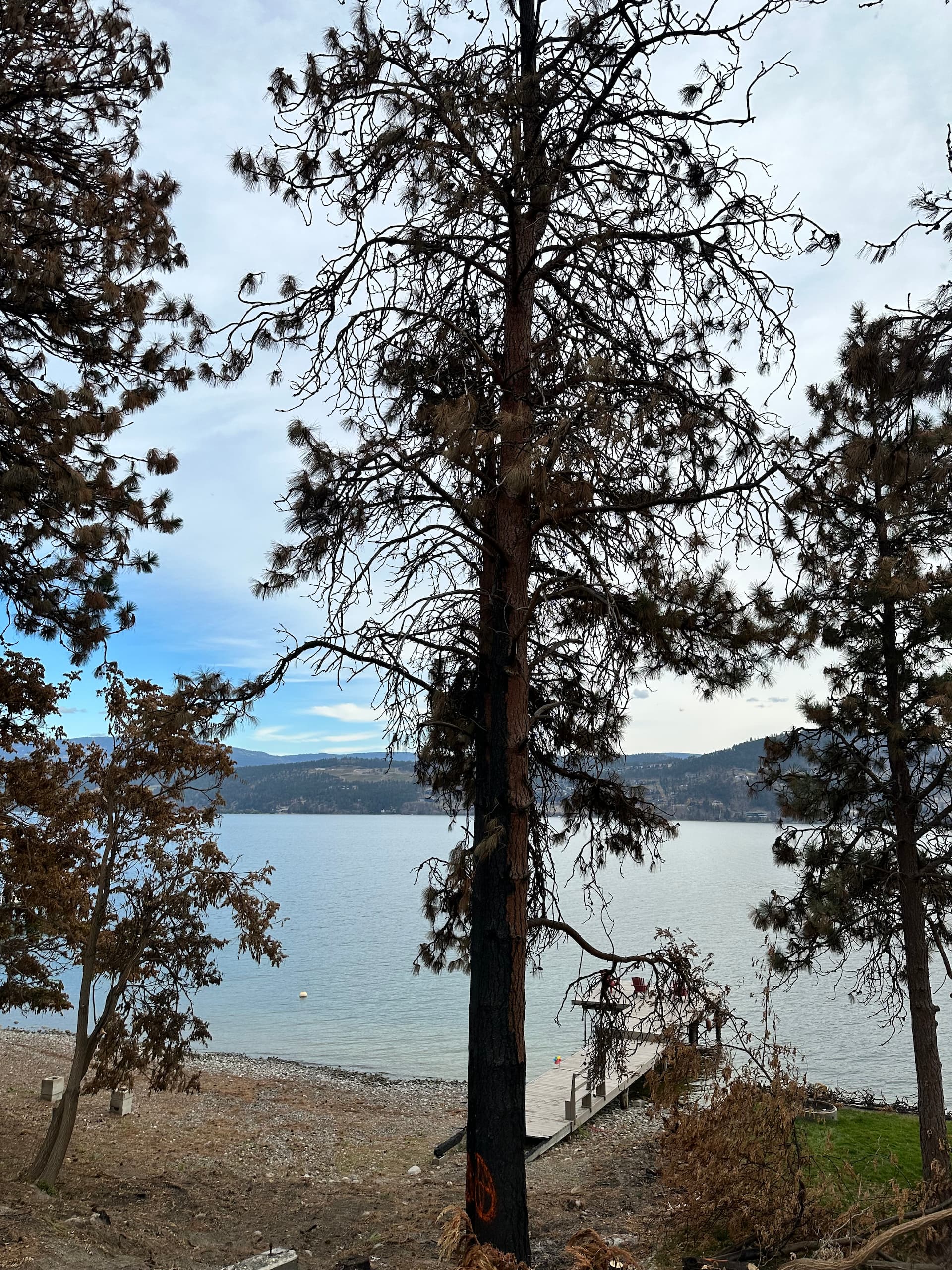
On the ground, that often changes the tone of the project. Clients move from vague anxiety to informed decision-making. Crews arrive with a clear purpose. The work becomes more precise. In some cases, the tree is preserved with targeted treatment. In others, removal proceeds with confidence because alternatives were considered and found wanting. Either way, the process is more accountable.
Choosing advice you can trust
If there is one practical takeaway, it is that tree care decisions deserve the same seriousness people give to other high-consequence property issues. A large tree over a home, a storm-damaged stem near a driveway, or a canopy management question in a fire-prone area should not be answered by guesswork or habit. They should be answered by trained assessment.
A Certified Arborist Consultation is valuable because it places judgment before action. It brings standards, ethics, continuing education, and risk-based thinking into decisions that affect safety, property, and long-term landscape value. For owners, managers, and communities that want tree care done responsibly, that is not an extra. It is the foundation.
Name: Ace Tree Services Ltd.
Address: 4656 Wallace Hill Road, Kelowna, BC
Phone: 250-212-9593
Website: https://acetree.ca/
Hours:
Monday: 7:00 AM–5:00 PM
Tuesday: 7:00 AM–5:00 PM
Wednesday: 7:00 AM–5:00 PM
Thursday: 7:00 AM–5:00 PM
Friday: 7:00 AM–5:00 PM
Saturday: 7:00 AM–5:00 PM
Sunday: Closed
Emergency tree services: 24/7 emergency service is listed.
Open-location code / Plus code: RHF8+8G Kelowna, British Columbia, Canada
Map/listing URL: https://www.google.com/maps/place/Ace+Tree+Services+Ltd./@49.8232606,-119.4337283,563m/data=!3m1!1e3!4m6!3m5!1s0x537d8b1d074815c5:0x450b88afa7a41435!8m2!3d49.8232606!4d-119.4337283!16s%2Fg%2F11ydkpnh22
Embed iframe:
Socials: https://www.facebook.com/people/Ace-Tree-Services/61585901931447/
https://m.yelp.com/biz/ace-tree-services-kelowna
Ace Tree Services Ltd. provides professional tree service for residential, commercial, and municipal customers in Kelowna and across the Okanagan Valley.
The company’s listed services include tree removal, stump removal and grinding, tree pruning and crown shaping, emergency tree services, certified arborist consultation, dangerous tree assessment, tree cable and bracing, and wildfire mitigation.
Ace Tree Services works with homeowners, businesses, property managers, and public-sector clients that need safe, practical tree care in the Kelowna area.
The official site highlights ISA-certified arborists, insurance, and experience handling both routine and complex tree service situations.
Customers can contact Ace Tree Services for tree care planning, hazard concerns, emergency tree cleanup, pruning needs, stump grinding, or advice about trees near homes, fences, driveways, and landscaping.
Ace Tree Services lists regular work hours from 7:00 AM to 5:00 PM Monday through Friday, with 24/7 emergency tree service available for urgent situations.
For tree service in Kelowna, call 250-212-9593 or visit https://acetree.ca/
The public map listing places Ace Tree Services Ltd. in Kelowna and can help customers find directions to the Wallace Hill Road area.
Popular Questions About Ace Tree Services Ltd.
What services does Ace Tree Services Ltd. provide?
Ace Tree Services Ltd. provides tree removal, stump removal and grinding, tree pruning and crown shaping, emergency tree services, certified arborist consultation, dangerous tree assessment and removal, tree cable and bracing, and wildfire mitigation.
Where is Ace Tree Services Ltd. located?
The official website lists Ace Tree Services Ltd. at 4656 Wallace Hill Road, Kelowna, BC.
What areas does Ace Tree Services Ltd. serve?
The official website describes Ace Tree Services as located in Kelowna and servicing the Okanagan.
What phone number should customers call?
Customers can call Ace Tree Services Ltd. at 250-212-9593.
What are Ace Tree Services Ltd.’s regular hours?
The official website lists work hours as 7:00 AM to 5:00 PM, Monday through Friday. Saturday and Sunday regular hours are not listed and should be confirmed directly.
Does Ace Tree Services Ltd. offer emergency tree service?
Yes. The official website lists 24/7 emergency services for urgent tree situations, including emergency tree removal, dangerous tree assessment, stabilization, and limb or branch cleanup.
Does Ace Tree Services Ltd. have certified arborists?
Yes. The official website states that Ace Tree Services has ISA-certified arborists.
Can Ace Tree Services Ltd. help with wildfire mitigation?
Yes. Wildfire mitigation is listed as one of the company’s tree services.
How do I contact Ace Tree Services Ltd.?
Call 250-212-9593 or visit https://acetree.ca/.
Landmarks Near Kelowna, BC
Wallace Hill Road: A local Kelowna road near the address listed for Ace Tree Services Ltd.
Okanagan Lake: A major Kelowna landmark near residential, commercial, and waterfront properties that may need tree pruning, removal, or hazard assessment.
Downtown Kelowna: A central area with homes, offices, rental properties, restaurants, and commercial sites that may need professional tree care.
Mission / Lower Mission: A well-known Kelowna area with mature landscaping, residential properties, and lake-adjacent homes.
South East Kelowna: A rural and residential area with larger properties, orchards, and tree-care needs that can include pruning, removals, and wildfire mitigation.
Crawford: A residential area near the southeast side of Kelowna where homeowners may need tree trimming, hazard assessment, and stump grinding.
Kettle Valley: A hillside residential neighborhood where tree condition, slope, wind exposure, and defensible-space planning can matter for property owners.
Myra-Bellevue Provincial Park: A major outdoor landmark near southeast Kelowna and a useful point of orientation for nearby properties.
Gallagher’s Canyon: A residential and golf community near southeast Kelowna where tree maintenance and wildfire-conscious vegetation management can be practical concerns.
Orchard Park Shopping Centre: A major central Kelowna retail landmark and reference point for customers traveling across the city.
Highway 97: A major Kelowna corridor connecting neighborhoods, commercial properties, and service routes throughout the region.
Kelowna City Park: A recognizable central landmark near downtown neighborhoods and lakefront properties.
Glenmore: A Kelowna neighborhood with residential and commercial properties that may need pruning, storm cleanup, and general tree care.
Rutland: A large residential and commercial area where customers may need tree removal, pruning, stump grinding, or arborist consultation.
Black Mountain: A hillside community where slope, wind, wildfire exposure, and access can influence tree service planning.
For tree service near these Kelowna landmarks, contact Ace Tree Services Ltd. at 250-212-9593 or visit https://acetree.ca/