Crown Reduction and Directional Pruning Explained
Tree pruning gets talked about as if it were one thing. In practice, it is a collection of very different techniques, each meant to solve a different problem. Crown reduction and directional pruning are two of the most misunderstood. Homeowners often hear the words, nod along, and picture a tree simply being made smaller. That is not what skilled pruning looks like.
When these methods are done well, the tree still looks like itself. Its form remains natural, the cuts make biological sense, and the work reduces strain or conflict without creating bigger problems later. When they are done poorly, the result is familiar: stubs, lopsided canopies, aggressive regrowth, and a tree that looks stressed for years. In the worst cases, bad pruning creates the very hazards the work was supposed to prevent.
That gap between careful reduction and crude cutting is where a lot of confusion lives. It also explains why Tree Pruning & Crown Shaping should never be treated as cosmetic trimming alone. Good arboriculture is about structure, risk, species response, and realistic objectives.
What crown reduction actually means
Crown reduction is the selective shortening of branches to reduce the overall size of a tree’s canopy, usually in height, spread, or both. The key word is selective. The branch is not cut at a random point. It is reduced back to a suitable lateral branch, using a proper reduction cut, so future growth has somewhere sensible to continue.
That distinction matters more than most people realize. If someone simply cuts a long branch halfway and leaves a stub, the tree has not been reduced in a useful way. It has been injured and disfigured. Proper crown reduction works with the tree’s existing branch architecture. The goal is not to flatten the top, carve a sphere, or force a mature tree into a shape it was never built to hold.
In the field, crown reduction is often considered when a tree has outgrown its available space, when end weight on long limbs needs to be decreased, or when there is a need to lessen interaction with nearby structures or infrastructure. In some cases, it is also part of risk mitigation after a Dangerous Tree Assessment and Removal process shows that reduction may lower risk without resorting immediately to full removal.
That last point deserves emphasis. Tree risk is not a simple safe-or-unsafe decision. Arborists are trained to assess risk systematically and recommend measures that bring it to an acceptable level when possible. There is no completely safe tree. The work is often about managing likelihood and consequence, not pretending risk can be erased.
How directional pruning differs
Directional pruning is closely related, but its emphasis is not just size. It is about guiding growth away from a target or conflict point. The target might be a roof edge, a service line, a driveway approach, a neighboring structure, or any area where branch growth is likely to create recurring problems.
Again, the method is subtle when done properly. A pruning cut redirects future extension toward a lateral that is already growing in a more suitable direction. Over time, that matters. Instead of allowing a limb to hazardous tree removal keep driving straight into a conflict and then hacking it back every few years, the arborist works with the tree’s natural branching pattern to encourage growth where there is room.
This is one reason directional pruning is valued in utility-related tree work. The concept is not just clearance today. It is clearance with some thought for what the tree will do next. Short-term appearance can fool people into thinking a harder cut is more effective, but hard cuts often trigger strong regrowth in all the wrong places. Directional pruning usually asks for more judgment and restraint. It is less dramatic on day one and often better on year five.
Reduction is not topping
A lot of bad outcomes start with a homeowner saying, “Can you just take the top down?” That phrase has led to countless topped trees. Topping is not crown reduction. It is an improper practice that removes large portions of the canopy indiscriminately, often leaving stubs or cutting back to branches too small to assume the role of the removed leader.
Once that happens, the tree may respond with vigorous shoots clustered near the cuts. Those shoots can become long quickly, but they are not the same as well-structured branches developed over time. The tree’s shape is compromised, maintenance needs often increase, and the wound response is far from ideal.
Proper reduction, by contrast, respects branch unions, uses suitable lateral branches, and preserves the tree’s natural outline as much as possible. The difference is obvious to anyone who has watched both over several growing seasons. One approach settles in. The other keeps demanding correction.
Why a tree might need one of these methods
Not every large tree should be reduced. Not every overextended limb should be shortened. Good pruning starts with a reason, not a tool. A mature tree may be a candidate for crown reduction or directional pruning when one or more of the following conditions exist:
- a branch or canopy section is extending into a structure or recurring conflict area
- end weight on a long limb needs to be reduced as part of risk management
- a tree’s size must be moderated without destroying its natural form
- prior storm damage has altered branch structure and selective retrenchment is appropriate
- pruning is being used alongside Tree Cable and Bracing or other mitigation measures
Even then, suitability depends on the species, the tree’s condition, the extent of reduction being considered, and whether the objective is realistic. Some trees tolerate thoughtful reduction better than others. Some can be guided gradually over multiple pruning cycles. Some are poor candidates for heavy intervention, especially if decline, defects, or previous bad cuts have already narrowed the margin for error.
The anatomy of a good reduction cut
This is where experience shows. A proper reduction cut is made back to a lateral branch large enough to assume the terminal role. Arborists learn proper branch removal and reduction cuts for a reason. The cut location influences wound response, growth direction, structural development, and appearance.
A random cut in open wood leaves a problem. A cut placed with purpose leaves the tree a path forward.
Good reduction work usually involves moving through the canopy with patience. The arborist studies the branch from the tip back toward the trunk, looking for a suitable lateral that allows enough shortening to meet the objective without producing an awkward or biologically poor result. Sometimes the right answer is that no suitable cut exists. In that case, the branch may be a poor candidate for reduction, or the tree may not be able to meet the client’s goal without unacceptable damage.
That is a hard conversation, but an honest one. It is also where a Certified Arborist Consultation earns its keep. The point of expertise is not just to say yes with confidence. It is to explain when the desired outcome and the tree’s biology are at odds.
Reading the tree before touching it
A seasoned arborist spends a lot of time looking before making the first cut. Canopy architecture matters. So does species form. So does age. A reduction plan that makes sense on one tree can be completely wrong on another, even if both stand at the same height in similar yards.
The first questions are basic but important. What is the client trying to achieve? Is the issue actual interference, perceived shade, fear after a storm, or concern about a visible defect? Has the tree been pruned badly before? Is this a one-time correction, or the beginning of a repeated maintenance cycle? Is pruning enough, or does the situation belong in the realm of Dangerous Tree Assessment and Removal?
Those questions shape the work. A tree near a house may need directional pruning to move future growth off the roofline. Another may need selective crown reduction on elongated scaffold limbs to lower loading. Another may be a poor pruning candidate altogether, where Emergency Tree Services or removal is more appropriate because defects or damage make retention unrealistic.
That judgment should not be guessed at from the driveway.
When crown reduction is the better option than removal
Tree Removal Services have an important place in arboriculture. Some trees are dead, failing, irreparably damaged, or simply incompatible with their site. Removal is sometimes the most responsible recommendation. But there are also many cases where clients assume a tree must come down when a targeted reduction can address the immediate issue.
This is common after storm events. A client sees a large leader over a roof, notices movement Tree Pruning & Crown Shaping in the wind, and asks whether the whole tree has become dangerous. Sometimes the concern is justified. Sometimes a structured assessment shows that a combination of pruning, weight reduction, and perhaps Tree Cable and Bracing can lower risk enough to retain the tree. Since no tree can be made absolutely risk-free, the task is to match the treatment to the actual level of concern and the value of the tree.
That said, pruning should not be used to keep a fundamentally unsound tree standing at all costs. Reduction is not a magic rescue for every compromised specimen. There are times when the most professional answer is removal, followed by Stump Removal & Grinding if the site needs to be cleared for replanting or construction.
Directional pruning near conflict points
Directional pruning shines when a tree is healthy enough to retain and the issue is repeated encroachment into a predictable zone. Roof corners are a classic example. So are driveways where delivery vehicles pass close to low lateral growth, or building facades where branches rub in the wind.
What separates directional pruning from reactive trimming is timing. Done early enough, it helps shape future growth while cuts can remain smaller. Done late, after branches are large and the conflict is severe, the options narrow. Larger cuts may be required, form may be harder to preserve, and the tree may respond less elegantly.
This is one reason routine assessments matter. Clients often wait until a branch is already touching the structure or until a windstorm makes the issue impossible to ignore. By then, what could have been a measured pruning visit becomes a more intrusive intervention. In some properties, particularly those in fire-prone areas, this intersects with FireSmart Tree Services. The objective there is not just clearance from a building in a visual sense, but a broader strategy to reduce vulnerability around the home while preserving healthy trees where feasible.
Storms, breakage, and emergency judgment
Emergency Tree Services frequently involve trees that have lost limbs, split leaders, or developed sudden lean concerns after wind or heavy weather. In those moments, people understandably want quick answers. Can it be saved? Should it be cut back hard? Does it all need to come down today?
Emergency response and proper pruning are related but not identical. The immediate priority is safety, site access, and stabilizing obvious hazards. Once the acute risk is controlled, the secondary question is whether restorative pruning, crown reduction, or directional pruning has a legitimate role. Some trees can be rebalanced thoughtfully after breakage. Others have lost too much structure or show defects that make retention unwise.
The worst outcomes often come from panic cuts. Someone removes half the canopy because it feels safer, without regard for branch structure, future growth, or the tree’s remaining stability. A measured assessment is slower, but it usually leads to better long-term decisions.
How support systems fit into the picture
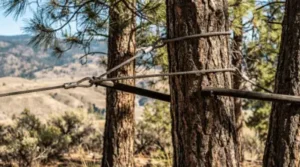
Pruning and structural support often work together. Tree Cable and Bracing may be recommended when a tree has a structural weakness that can be mitigated, while pruning reduces loading on the relevant limbs or leaders. The support system is not a substitute for pruning, and pruning is not a substitute for support when support is truly needed. Each has a role.
For example, if a codominant structure or an overextended limb presents concern, selective reduction may reduce strain while a support system addresses movement or load-sharing. That combined approach can make sense when the tree has value, the defect is manageable, and the objective is preservation with risk reduction.
This is where certification matters. ISA Certified Arborists are trained in tree care science, tested through a comprehensive exam, required to continue education, and held to a code of ethics. That training does not make every decision simple, but it does establish a framework for making defensible recommendations instead of improvising with a chainsaw.
What a careful arborist will discuss with you
When a pruning proposal is sound, the explanation usually feels clear rather than sales-driven. Expect a qualified professional to talk through points like these:
- the specific objective of the pruning, such as clearance, load reduction, or growth redirection
- whether the tree is a good candidate for reduction at all
- what natural form can realistically be preserved
- whether the work may need follow-up pruning in future cycles
- whether removal or additional risk mitigation should also be considered
Those conversations matter because pruning decisions commit the tree to a future. A reduction cut made today shapes architecture, maintenance needs, and risk profile for years. Homeowners deserve to understand not just what will be cut, but why.
The visual result should still make sense
One of the best informal tests for crown reduction and directional pruning is visual coherence. Stand back across the street. Does the tree still look like a tree of its species, or does it look abruptly shorn, flattened, or tufted at the ends? Proper reduction can certainly be visible, especially on larger jobs, but it should not look arbitrary.
Natural form is not a cosmetic luxury. It often reflects whether the arborist respected the tree’s branch structure. A canopy that still reads as balanced usually indicates cuts were distributed with intention. A canopy with scattered stubs, lion-tailed branch ends, or severe asymmetry often signals poor practice.
Clients sometimes mistake severity for value. They want to “get their money’s worth” by seeing a lot removed. Experienced arborists know that the best work is often measured, not dramatic. If the objective was modest clearance from a structure, the right result may be a canopy that looks only lightly edited. That restraint is a sign of competence, not timidity.
FireSmart objectives require restraint too
In fire-prone areas, FireSmart Tree Services can create pressure for aggressive pruning. Property owners want defensible space and reduced fuel continuity, which is understandable. But even here, over-pruning can create new problems if it weakens trees unnecessarily or leaves them structurally compromised.
The better approach is targeted. The arborist identifies which branches, spacing concerns, or canopy relationships matter most to the objective and works from there. Crown reduction may be appropriate in some cases, especially where overhang and proximity are real concerns. Directional pruning can help shift growth away from structures over time. But these methods should still respect tree biology and not become a pretext for topping.
What happens when the tree is not a pruning candidate
There are trees that simply cannot deliver the desired outcome through pruning. Sometimes the canopy conflict is too severe. Sometimes there are defects that place the tree in a higher risk category. Sometimes previous improper cuts have already destabilized the structure or triggered weak regrowth that creates recurring issues.
In those cases, forcing reduction onto the tree can make things worse. It may produce a poor form, larger wounds, frequent maintenance, and only marginal risk improvement. That is when Dangerous Tree Assessment and Removal becomes the more honest frame. If removal is recommended, it should be because retention is no longer defensible, not because pruning is inconvenient.
After removal, clients often focus immediately on the visible absence, then on the stump. Stump Removal & Grinding becomes part of restoring function to the site, whether the goal is replanting, grading, or simply eliminating an obstacle.
Why training and equipment matter
Large-tree pruning is dangerous work. That is not a slogan. Working aloft, managing limb weight, controlling lowering, and avoiding property damage or worker injury require training and equipment. Even when the pruning objective sounds simple, the execution can be technically demanding. A reduction cut near the outer canopy may look minor from the ground, but reaching it safely and lowering material in a controlled way is another matter.
That is why pruning large trees, and certainly removing them, should be left to trained professionals. It is also why the gap between a qualified tree crew and a pickup-truck chainsaw operation is so wide. The client may only see branches coming down. The real difference is in planning, rigging, cut selection, and the judgment to stop where the tree should not be pushed further.
The long view
The best crown reduction and directional pruning jobs tend to disappear into the landscape after a season or two. The tree adapts, the clearance remains functional, and the property owner stops thinking about that one limb over the driveway or that branch line nearing the roof. That quiet success is the mark of good work.
Poor pruning does the opposite. It demands attention. It produces stress growth, awkward form, and repeat problems. Homeowners end up calling again, sometimes for more corrective pruning, sometimes for Emergency Tree Services after a failure, sometimes for full Tree Removal Services that might have been avoidable years earlier.
Crown reduction and directional pruning are not shortcuts. They are precise tools. Used carefully, they can preserve trees, reduce conflict, and support reasonable risk management. Used carelessly, they can set a tree on a long decline. The difference is knowledge, restraint, and a willingness to match the method to the tree rather than forcing the tree to fit the method.
Name: Ace Tree Services Ltd.
Address: 4656 Wallace Hill Road, Kelowna, BC
Phone: 250-212-9593
Website: https://acetree.ca/
Hours:
Monday: 7:00 AM–5:00 PM
Tuesday: 7:00 AM–5:00 PM
Wednesday: 7:00 AM–5:00 PM
Thursday: 7:00 AM–5:00 PM
Friday: 7:00 AM–5:00 PM
Saturday: 7:00 AM–5:00 PM
Sunday: Closed
Emergency tree services: 24/7 emergency service is listed.
Open-location code / Plus code: RHF8+8G Kelowna, British Columbia, Canada
Map/listing URL: https://www.google.com/maps/place/Ace+Tree+Services+Ltd./@49.8232606,-119.4337283,563m/data=!3m1!1e3!4m6!3m5!1s0x537d8b1d074815c5:0x450b88afa7a41435!8m2!3d49.8232606!4d-119.4337283!16s%2Fg%2F11ydkpnh22
Embed iframe:
Socials: https://www.facebook.com/people/Ace-Tree-Services/61585901931447/
https://m.yelp.com/biz/ace-tree-services-kelowna
Ace Tree Services Ltd. provides professional tree service for residential, commercial, and municipal customers in Kelowna and across the Okanagan Valley.
The company’s listed services include tree removal, stump removal and grinding, tree pruning and crown shaping, emergency tree services, certified arborist consultation, dangerous tree assessment, tree cable and bracing, and wildfire mitigation.
Ace Tree Services works with homeowners, businesses, property managers, and public-sector clients that need safe, practical tree care in the Kelowna area.
The official site highlights ISA-certified arborists, insurance, and experience handling both routine and complex tree service situations.
Customers can contact Ace Tree Services for tree care planning, hazard concerns, emergency tree cleanup, pruning needs, stump grinding, or advice about trees near homes, fences, driveways, and landscaping.
Ace Tree Services lists regular work hours from 7:00 AM to 5:00 PM Monday through Friday, with 24/7 emergency tree service available for urgent situations.
For tree service in Kelowna, call 250-212-9593 or visit https://acetree.ca/
The public map listing places Ace Tree Services Ltd. in Kelowna and can help customers find directions to the Wallace Hill Road area.
Popular Questions About Ace Tree Services Ltd.
What services does Ace Tree Services Ltd. provide?
Ace Tree Services Ltd. provides tree removal, stump removal and grinding, tree pruning and crown shaping, emergency tree services, certified arborist consultation, dangerous tree assessment and removal, tree cable and bracing, and wildfire mitigation.
Where is Ace Tree Services Ltd. located?
The official website lists Ace Tree Services Ltd. at 4656 Wallace Hill Road, Kelowna, BC.
What areas does Ace Tree Services Ltd. serve?
The official website describes Ace Tree Services as located in Kelowna and servicing the Okanagan.
What phone number should customers call?
Customers can call Ace Tree Services Ltd. at 250-212-9593.
What are Ace Tree Services Ltd.’s regular hours?
The official website lists work hours as 7:00 AM to 5:00 PM, Monday through Friday. Saturday and Sunday regular hours are not listed and should be confirmed directly.
Does Ace Tree Services Ltd. offer emergency tree service?
Yes. The official website lists 24/7 emergency services for urgent tree situations, including emergency tree removal, dangerous tree assessment, stabilization, and limb or branch cleanup.
Does Ace Tree Services Ltd. have certified arborists?
Yes. The official website states that Ace Tree Services has ISA-certified arborists.
Can Ace Tree Services Ltd. help with wildfire mitigation?
Yes. Wildfire mitigation is listed as one of the company’s tree services.
How do I contact Ace Tree Services Ltd.?
Call 250-212-9593 or visit https://acetree.ca/.
Landmarks Near Kelowna, BC
Wallace Hill Road: A local Kelowna road near the address listed for Ace Tree Services Ltd.
Okanagan Lake: A major Kelowna landmark near residential, commercial, and waterfront properties that may need tree pruning, removal, or hazard assessment.
Downtown Kelowna: A central area with homes, offices, rental properties, restaurants, and commercial sites that may need professional tree care.
Mission / Lower Mission: A well-known Kelowna area with mature landscaping, residential properties, and lake-adjacent homes.
South East Kelowna: A rural and residential area with larger properties, orchards, and tree-care needs that can include pruning, removals, and wildfire mitigation.
Crawford: A residential area near the southeast side of Kelowna where homeowners may need tree trimming, hazard assessment, and stump grinding.
Kettle Valley: A hillside residential neighborhood where tree condition, slope, wind exposure, and defensible-space planning can matter for property owners.
Myra-Bellevue Provincial Park: A major outdoor landmark near southeast Kelowna and a useful point of orientation for nearby properties.
Gallagher’s Canyon: A residential and golf community near southeast Kelowna where tree maintenance and wildfire-conscious vegetation management can be practical concerns.
Orchard Park Shopping Centre: A major central Kelowna retail landmark and reference point for customers traveling across the city.
Highway 97: A major Kelowna corridor connecting neighborhoods, commercial properties, and service routes throughout the region.
Kelowna City Park: A recognizable central landmark near downtown neighborhoods and lakefront properties.
Glenmore: A Kelowna neighborhood with residential and commercial properties that may need pruning, storm cleanup, and general tree care.
Rutland: A large residential and commercial area where customers may need tree removal, pruning, stump grinding, or arborist consultation.
Black Mountain: A hillside community where slope, wind, wildfire exposure, and access can influence tree service planning.
For tree service near these Kelowna landmarks, contact Ace Tree Services Ltd. at 250-212-9593 or visit https://acetree.ca/