Emergency Tree Services After Damage to Trees and Limbs
When a tree fails, the damage rarely ends with the break itself. A split leader can hang over a driveway for hours before dropping. A heavy limb can stay lodged in a neighboring canopy, quiet enough to seem stable until wind shifts. A trunk that looks upright after a storm may already have enough structural loss to become a serious hazard. That is why Emergency Tree Services are not simply about cutting up debris and hauling it away. The work starts with risk, judgment, and timing.
In the field, the first challenge is usually not the saw work. It is deciding what can wait, what cannot, and what should not be touched until trained crews arrive. Tree service work commonly includes pruning, removal, maintenance, and storm-damage response for both residential and commercial properties. After storm damage or impact damage, those routine categories begin to overlap. A damaged tree may need immediate stabilization, careful Tree Pruning & Crown Shaping, full Tree Removal Services, or a combination of those approaches over several visits.
There is a temptation, especially after a rough night of wind or heavy snow, to treat every broken branch the same. That is where people get hurt and where good trees get overcut. Large-tree pruning and removal are dangerous operations and are best handled by people trained and equipped to work safely in trees. The difference between a manageable cleanup and a preventable injury is often a matter of recognizing hidden loading in wood, compromised anchors, or decay that was masked until the failure exposed it.
The first hours after a tree is damaged
The immediate aftermath is not the time for guesswork. A branch that has partially failed can still be carrying significant weight. A stem that split during the storm may be held together by bark alone. Even an apparently simple limb on the ground may still be attached and under tension. People tend to focus on what they can see, the branch across the lawn, the trunk leaning toward the fence, the leaves in the driveway. Experienced crews look just as hard at what is above, what is still attached, and what will move when the first cut is made.
In many emergency calls, the site itself adds pressure. Homeowners want access to a car, a business needs an entrance cleared, or a property manager is dealing with liability concerns around walkways and parking areas. Those are valid concerns, but they do not change the order of work. The priority is to identify the parts of the tree most likely to fail next and the targets most likely to be struck if they do.
A careful response often begins with establishing distance, not action. Keep people out from under broken limbs. Do not pull on hanging branches with ropes from the ground unless the tree crew has directed it. Do not climb a storm-damaged tree without proper training and equipment. Damage changes how wood behaves. A tree that was safe to enter a month ago may not be safe to climb after a split, Look at this website root disturbance, or large crown loss.
Why assessment comes before removal
One of the most misunderstood parts of emergency tree work is Dangerous Tree Assessment and Removal. The assessment portion matters as much as the removal. Tree risk assessment is a systematic process used to identify, analyze, and evaluate risk, then recommend measures that bring risk to an acceptable level. That does not mean every damaged tree must come down. It also does not mean every damaged tree can be saved.
There is no completely safe tree. Some level of risk is always part of living with trees. The question is whether the current level of risk is reasonable for the site and whether practical treatment can reduce that risk without unnecessary intervention. That is where a Certified Arborist Consultation can be valuable. ISA Certified Arborists are trained in the art and science of tree care, they pass a comprehensive exam, continue their education to maintain certification, and follow a code of ethics. In practice, that background helps them separate panic from evidence.
A good emergency assessment usually considers the type of failure, how much of the canopy was lost, whether major scaffold limbs are compromised, whether the remaining structure can be pruned back to sound attachment points, and what sits within striking distance if the tree or branch fails again. It also considers time. Some conditions demand immediate action. Others allow for temporary protection, a short monitoring period, or staged work when access and weather improve.
This is where experience shows. Two trees can look equally messy after a storm and require completely different responses. One may be a cleanup and reduction-pruning job. Another may have internal weakness or severe structural loss that makes retention unreasonable. The casual observer often sees only broken branches. The arborist sees load paths, attachment strength, and the limits of what corrective pruning can realistically accomplish.
What emergency crews are actually trying to accomplish
The public often thinks of emergency tree work as a race to cut everything down. In reality, the goal is more precise. Crews are trying to make the site safer while preserving as much tree value as the condition reasonably allows. Sometimes that means immediate Tree Removal Services. Sometimes it means targeted branch removal, weight reduction, or controlled lowering of broken wood to prevent secondary damage.
Controlled lowering matters more than most people realize. In damaged canopies, free-falling sections can tear additional bark, strip live limbs, or transfer shock into already stressed unions. Proper rigging and controlled handling help limit those chain reactions. Pruning guidance in arboriculture recognizes the importance of proper branch removal and reduction cuts, crown reduction, and directional pruning. It also warns against poor techniques such as topping or leaving stubs. Those shortcuts often create larger wounds, weaker regrowth, and more future hazard.
A storm-damaged tree should not be “cleaned up” by simply cutting everything back to a convenient height. Topping may produce a temporarily shorter tree, but it does not repair the original structural problem. More often, it substitutes one problem for several new ones. The same is true of random stub cuts made in haste. Emergency conditions do not suspend good tree care principles. If anything, they make them more important.
Cases where pruning can save a tree
Not every broken tree is a lost cause. Some trees recover surprisingly well when pruning is selective and based on sound structure. If a portion of the crown failed but enough well-attached, healthy structure remains, Tree Pruning & Crown Shaping may restore balance and reduce the chance of additional failure. Reduction cuts can shorten overextended limbs back to suitable lateral branches. Broken ends can be removed cleanly. The remaining canopy can sometimes be reshaped so wind load is better distributed.
That said, pruning is not magic. You cannot prune a tree back into structural integrity if the main framework is gone. Nor should crown shaping be treated as cosmetic after major damage. Its purpose is functional. It seeks to reduce risk, improve load distribution, and help the tree compartmentalize injury while maintaining enough foliage to support recovery.
There is a judgment call here that separates thoughtful work from overpromising. A tree may technically survive a severe storm event but never return to a form appropriate for the site. If it stands next to a home, over a parking area, or near regular pedestrian traffic, the threshold for acceptable residual risk may be lower. In a less occupied part of a property, the same tree might be managed differently. Site use matters.
When removal is the responsible choice
There are times when Dangerous Tree Assessment and Removal leads directly to full removal because retention would be irresponsible. If major structural parts are no longer reliable, if the tree cannot be reduced to a manageable risk level through pruning or support, or if failure would threaten people or property in a high-use area, Tree Removal Services become the practical option.
This can be a difficult conversation. Property owners often have history with a mature tree. It may frame the house, shade the yard, or mark a family event. Good arborists do not dismiss that attachment, but they also do not let sentiment obscure risk. A tree can be valuable and still be unsafe.
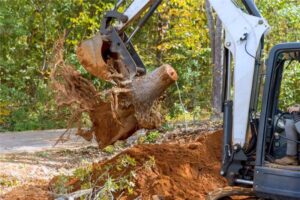
Removal after damage is rarely as straightforward as removal of a healthy standing tree. Broken leaders, hanging limbs, unstable tops, or irregular load distribution can make access and sequencing more complicated. Each cut affects what moves next. The work may involve piecing the tree down carefully, controlling sections as they are removed, and protecting surrounding structures from secondary impact.
Afterward, Stump Removal & Grinding often becomes part of the conversation. Not every emergency job includes the stump right away. Sometimes the urgent need is to remove the above-ground hazard and reopen access. In other cases, especially where rebuilding, replanting, or surface restoration is planned, stump work follows soon after. Separating those phases can make sense, particularly when the initial response has to focus on safety first.
The role of support systems after partial failure
Some damaged trees can benefit from Tree Cable and Bracing, but this is one of the most misapplied ideas in emergency tree care. Support systems are not a shortcut for keeping a tree that should be removed. They are tools used in selected cases where enough sound structure remains and where supplemental support can reduce the likelihood of failure in codominant stems or weakened unions.
Structural support is part of the broader arboricultural toolkit referenced in professional exam outlines and risk assessment practice. The important point is that support systems work best when paired with good pruning, realistic expectations, and follow-up inspection. A cable is not a permanent pardon for a poor structure. It is a management measure, and management implies ongoing observation.
In practical terms, support systems are often most defensible when the defect is understood, the targets justify mitigation, and the tree still offers enough health and structure to warrant preservation. If those conditions are missing, cabling and bracing can drift into wishful thinking. The tree remains risky, the owner feels falsely reassured, and the hazard is postponed rather than reduced.
What property owners should do before crews arrive
The safest thing a property owner can do in the first phase is often the simplest. Secure the area and let trained people handle the tree. Even small actions can create new hazards if the damage is not fully understood.
- Keep people and pets away from the damaged tree and any area beneath hanging limbs.
- Do not climb the tree or attempt to cut suspended branches from a ladder.
- Avoid moving attached limbs on the ground that may still be under tension.
- Take note of visible splits, leaning, or broken tops so you can describe them clearly.
- Arrange for a Certified Arborist Consultation when the situation involves major limbs, large trees, or uncertainty about whether the tree can be retained.
That short list may feel restrained, especially when cleanup seems urgent, but restraint is often the safer move. Emergency tree scenes can look static while the wood fibers are still loaded and ready to shift.
The value of a certified eye
In emergency situations, people often ask whether certification really makes a difference. In my view, it matters most when the answer is not obvious. Any crew can remove a tree that is clearly shattered beyond recovery and lying on open ground. The harder work is evaluating the marginal cases, the damaged trees that may be retained with treatment, or the trees that appear survivable but have enough structural compromise to warrant removal.
An ISA Certified Arborist brings a trained framework to that decision. The certification itself does not make every judgment infallible, but it signals a baseline of knowledge, continuing education, and ethical responsibility. That matters when the recommendation affects safety, cost, and the long-term value of the landscape.
It also matters in how the work is specified. Vague phrases like “trim it back hard” or “take off the dangerous parts” often lead to poor outcomes. A more professional recommendation is likely to distinguish between cleaning broken wood, reducing specific limbs, reshaping the remaining crown, installing support where justified, or removing the tree because mitigation would not bring risk to an acceptable level. Precision protects both the tree and the client.
After the emergency, the landscape usually needs a second look
Once the broken wood is down and access is restored, many properties still need follow-up. Storm events and impact failures have a way of revealing weak branch attachments, overextended limbs, or neglected maintenance in nearby trees. The tree that failed first is not always the only tree that needs attention.
This is where broader tree care services come back into view. Routine pruning, selective crown reduction, and periodic inspection can reduce the chance of future emergency calls. That should not be oversold. No amount of maintenance creates a perfectly safe tree, and no arborist can promise immunity from severe weather. Still, there is a meaningful difference between a tree that has been thoughtfully managed and one that has been ignored until the first major break.
For some properties, especially those in areas where wildfire planning is part of overall landscape management, FireSmart Tree Services may enter the discussion after the immediate crisis is over. The purpose there is not to turn every tree problem into a fire conversation. It is to recognize that resilience planning is often broader than one storm event. Tree spacing, pruning strategy, and species placement can intersect with both structural safety and fire-conscious management. The exact approach depends on the site, but the larger point is simple: emergency response should sometimes lead to long-term planning, not just disposal.
What good emergency work looks like afterward
The best emergency tree jobs are not always the ones that look dramatic from the street. Good work can be quiet. The hazard is reduced. The remaining tree, if retained, has clean cuts and a balanced structure rather than a butchered silhouette. The site is safer. The recommendation for next steps is clear.
That clarity matters because damaged trees often leave owners with a mix of relief and uncertainty. They want to know whether the tree is now safe, whether another limb could fail, whether the stump should come out, whether a support system is worth it, whether nearby trees need inspection. The right answer is rarely a one-size-fits-all package. It is a practical assessment of the tree, the targets, and the owner's tolerance for future risk.
There is also a financial dimension, though exact costs vary too much by region, size, access, and complexity to state hard numbers responsibly here. Emergency work is often more complex than scheduled work because crews are responding to unstable structures, time pressure, or difficult access. A property owner who understands that distinction tends to make better decisions. They see that they are not simply paying for cutting. They are paying for trained judgment, safe work practices, proper equipment, and the ability to manage a hazardous situation without making it worse.
The trees that deserve saving, and the ones that do not
A mature tree can absorb a surprising amount of damage and still remain worth preserving. Another tree, with less visible damage, can cross a line where the structure no longer supports reasonable confidence. That tension is at the heart of emergency arboriculture. The work is not about saving every tree or removing every damaged tree. It is about making the best defensible choice with the evidence available.
That choice should be grounded in systematic risk assessment, not fear. It should respect the basic truth that some risk always exists around trees while still taking obvious hazards seriously. It should use pruning where pruning can help, structural support where support is justified, and removal where removal is the honest answer. When needed, it should include Stump Removal & Grinding as part of complete site recovery. And when uncertainty is high, it should involve a Certified Arborist Consultation rather than a rushed decision from the ground.
Emergency Tree Services are at their best when they combine urgency with discipline. The urgency is real. So is the need for restraint. After damage to trees and limbs, that balance is what protects people, preserves worthy trees, and keeps one storm from turning into a much bigger loss.
Name: Ace Tree Services Ltd.
Address: 4656 Wallace Hill Road, Kelowna, BC
Phone: 250-212-9593
Website: https://acetree.ca/
Hours:
Monday: 7:00 AM–5:00 PM
Tuesday: 7:00 AM–5:00 PM
Wednesday: 7:00 AM–5:00 PM
Thursday: 7:00 AM–5:00 PM
Friday: 7:00 AM–5:00 PM
Saturday: 7:00 AM–5:00 PM
Sunday: Closed
Emergency tree services: 24/7 emergency service is listed.
Open-location code / Plus code: RHF8+8G Kelowna, British Columbia, Canada
Map/listing URL: https://www.google.com/maps/place/Ace+Tree+Services+Ltd./@49.8232606,-119.4337283,563m/data=!3m1!1e3!4m6!3m5!1s0x537d8b1d074815c5:0x450b88afa7a41435!8m2!3d49.8232606!4d-119.4337283!16s%2Fg%2F11ydkpnh22
Embed iframe:
Socials: https://www.facebook.com/people/Ace-Tree-Services/61585901931447/
https://m.yelp.com/biz/ace-tree-services-kelowna
Ace Tree Services Ltd. provides professional tree service for residential, commercial, and municipal customers in Kelowna and across the Okanagan Valley.
The company’s listed services include tree removal, stump removal and grinding, tree pruning and crown shaping, emergency tree services, certified arborist consultation, dangerous tree assessment, tree cable and bracing, and wildfire mitigation.
Ace Tree Services works with homeowners, businesses, property managers, and public-sector clients that need safe, practical tree care in the Kelowna area.
The official site highlights ISA-certified arborists, insurance, and experience handling both routine and complex tree service situations.
Customers can contact Ace Tree Services for tree care planning, hazard concerns, emergency tree cleanup, pruning needs, stump grinding, or advice about trees near homes, fences, driveways, and landscaping.
Ace Tree Services lists regular work hours from 7:00 AM to 5:00 PM Monday through Friday, with 24/7 emergency tree service available for urgent situations.
For tree service in Kelowna, call 250-212-9593 or visit https://acetree.ca/
The public map listing places Ace Tree Services Ltd. in Kelowna and can help customers find directions to the Wallace Hill Road area.
Popular Questions About Ace Tree Services Ltd.
What services does Ace Tree Services Ltd. provide?
Ace Tree Services Ltd. provides tree removal, stump removal and grinding, tree pruning and crown shaping, emergency tree services, certified arborist consultation, dangerous tree assessment and removal, tree cable and bracing, and wildfire mitigation.
Where is Ace Tree Services Ltd. located?
The official website lists Ace Tree Services Ltd. at 4656 Wallace Hill Road, Kelowna, BC.
What areas does Ace Tree Services Ltd. serve?
The official website describes Ace Tree Services as located in Kelowna and servicing the Okanagan.
What phone number should customers call?
Customers can call Ace Tree Services Ltd. at 250-212-9593.
What are Ace Tree Services Ltd.’s regular hours?
The official website lists work hours as 7:00 AM to 5:00 PM, Monday through Friday. Saturday and Sunday regular hours are not listed and should be confirmed directly.
Does Ace Tree Services Ltd. offer emergency tree service?
Yes. The official website lists 24/7 emergency services for urgent tree situations, including emergency tree removal, dangerous tree assessment, stabilization, and limb or branch cleanup.
Does Ace Tree Services Ltd. have certified arborists?
Yes. The official website states that Ace Tree Services has ISA-certified arborists.
Can Ace Tree Services Ltd. help with wildfire mitigation?
Yes. Wildfire mitigation is listed as one of the company’s tree services.
How do I contact Ace Tree Services Ltd.?
Call 250-212-9593 or visit https://acetree.ca/.
Landmarks Near Kelowna, BC
Wallace Hill Road: A local Kelowna road near the address listed for Ace Tree Services Ltd.
Okanagan Lake: A major Kelowna landmark near residential, commercial, and waterfront properties that may need tree pruning, removal, or hazard assessment.
Downtown Kelowna: A central area with homes, offices, rental properties, restaurants, and commercial sites that may need professional tree care.
Mission / Lower Mission: A well-known Kelowna area with mature landscaping, residential properties, and lake-adjacent homes.
South East Kelowna: A rural and residential area with larger properties, orchards, and tree-care needs that can include pruning, removals, and wildfire mitigation.
Crawford: A residential area near the southeast side of Kelowna where homeowners may need tree trimming, hazard assessment, and stump grinding.
Kettle Valley: A hillside residential neighborhood where tree condition, slope, wind exposure, and defensible-space planning can matter for property owners.
Myra-Bellevue Provincial Park: A major outdoor landmark near southeast Kelowna and a useful point of orientation for nearby properties.
Gallagher’s Canyon: A residential and golf community near southeast Kelowna where tree maintenance and wildfire-conscious vegetation management can be practical concerns.
Orchard Park Shopping Centre: A major central Kelowna retail landmark and reference point for customers traveling across the city.
Highway 97: A major Kelowna corridor connecting neighborhoods, commercial properties, and service routes throughout the region.
Kelowna City Park: A recognizable central landmark near downtown neighborhoods and lakefront properties.
Glenmore: A Kelowna neighborhood with residential and commercial properties that may need pruning, storm cleanup, and general tree care.
Rutland: A large residential and commercial area where customers may need tree removal, pruning, stump grinding, or arborist consultation.
Black Mountain: A hillside community where slope, wind, wildfire exposure, and access can influence tree service planning.
For tree service near these Kelowna landmarks, contact Ace Tree Services Ltd. at 250-212-9593 or visit https://acetree.ca/