How Structural Support Systems Fit Into Modern Tree Care
Structural support systems occupy a narrow but important place in arboriculture. They are not a cure-all, and they are not a substitute for good pruning, sound judgment, or timely removal. Used properly, though, they can help reduce the likelihood of failure in certain trees and allow a property owner to keep a valued specimen that might otherwise be lost. In modern tree care, that matters because the real work is rarely about preserving every tree at any cost. It is about balancing safety, site use, tree biology, and the practical limits of maintenance.
That balance is where Tree Cable and Bracing enters the conversation.
In the field, support systems usually come up after a close look at a structural weakness. Sometimes the issue is obvious from the ground, such as a tree with codominant stems that push against each other high in the canopy. Sometimes it shows up after a storm, when movement in the crown exposes a long-standing defect that had gone unnoticed for years. Other times the concern surfaces during routine Certified Arborist Consultation, when a homeowner asks a simple question, “Can this tree be made safer without taking it down?”
The answer is often nuanced. Modern tree care recognizes that there is no completely safe tree. Some level of risk is always present. The work of the arborist is to identify that risk, evaluate it systematically, and recommend a treatment that fits the condition of the tree and the consequences of failure. Structural support systems are one of those treatments, alongside Tree Pruning & Crown Shaping, monitoring, site management, and, in some cases, Dangerous Tree Assessment and Removal.
Support systems are a tool, not a default
A common misunderstanding is that cabling or bracing “fixes” a weak tree. It does not. A support system can reduce movement, redistribute load in a limited way, or help lessen the chance of a specific type of failure. It does not erase decay, reverse poor structure, or make an inherently unstable tree sound. That distinction matters because many poor decisions in tree care begin with the wrong goal.
The right goal is usually risk reduction.
That may seem like a subtle difference, but it changes the whole approach. If a mature tree has a structural defect over a garden bed, the management decision may be different than it would be over a driveway, a play area, or a building entrance. If the crown can be pruned to reduce leverage and wind load, support may be one part of a broader plan rather than the only treatment. If the defect is too advanced or the target below is too significant, Tree Removal Services may be the responsible recommendation.
This is why support systems fit best within a larger framework of modern arboriculture. They are neither old-fashioned hardware bolted into trees nor a premium add-on sold to anxious property owners. At their best, they are one option within a thoughtful management plan.
What modern tree care asks before hardware goes into a tree
Before any support system is considered, the tree has to be assessed. That sounds basic, but it is where professional tree care separates itself from guesswork. A systematic tree risk assessment looks at the condition of the tree, the likelihood of failure, what would be struck if failure occurred, and whether a practical treatment can bring risk down to an acceptable level.
A seasoned arborist will rarely jump straight from “there is a weak union” to “this tree needs a cable.” The more useful line of thinking is slower and more specific. What part of the tree is likely to fail? Under what conditions? Is the defect active or stable? Can pruning reduce the load enough? Is the tree worth retaining, based on size, species, site value, or landscape role? And if a support system is installed, who is going to inspect it over time?
These are not theoretical questions. They shape the recommendation.
A broad-crowned tree with a weak attachment in the upper canopy may respond well to selective pruning paired with a cable. Another tree with a compromised trunk or advanced structural defects may not be a candidate at all. In that case, a candid discussion about Dangerous Tree Assessment and Removal is more appropriate than trying to postpone the inevitable.
The role of Certified Arborist Consultation is especially important here. Certified Arborists are trained in the art and science of tree care, they must pass a comprehensive exam, continue their education, and follow a code of ethics. That does not mean every certified professional will make the same recommendation, but it does mean the conversation starts from accepted principles rather than improvisation.
Where support systems usually fit best
Structural support is most useful when there is a clearly identifiable weakness in an otherwise retainable tree. The keyword there is retainable. If the tree still offers value and the defect can be managed, support can make sense. If the tree is in irreversible decline or the level of risk is too high for the site, support becomes a poor substitute for action.
In practice, structural support often appears in cases involving crown architecture. This is where Tree Pruning & Crown Shaping and support work closely together. Proper pruning can reduce end weight, improve spacing, and limit the mechanical stress placed on weak attachments. It can also remove damaged or poorly attached limbs that do not belong in the long-term structure of the tree. What pruning should not do is compensate for weak structure through improper techniques. Topping, stub cuts, and rough reduction work are not solutions. They often create new problems while doing little to resolve the original one.
That point is worth stressing because homeowners sometimes look for visible reassurance. A tree that has been heavily cut back may look “safer” for a season, even if the cuts were poor and the biological cost was high. Modern tree care rejects that shortcut. Good pruning relies on proper branch removal and reduction cuts, with a clear purpose and respect for the tree’s architecture.
Support systems, then, fit best when used with restraint. They support a sound pruning strategy. They do not replace one.
A storm changes the timeline
Not every support decision is made under calm circumstances. Trees often reveal structural weaknesses during wind events, heavy wet snow, or after a branch failure. That is one reason Emergency Tree Services remain such a central part of the industry. Storm response is not only about clearing debris and removing what has already failed. It is also about identifying what may fail next.
This is where experience matters. After a storm, a property owner may see a split limb, a hanging branch, or a canopy that suddenly leans differently than it did the week before. A rushed fix can make matters worse. Large-tree pruning and removal are dangerous tasks even in ideal conditions, and post-storm trees are rarely ideal. Tension wood, compromised unions, hidden cracks, and unstable hangers all raise the stakes.
Sometimes emergency work ends with removal, because the damage is too severe. Sometimes it ends with temporary site control and a follow-up assessment. And sometimes the storm becomes the moment when an arborist identifies a defect that can be managed through pruning and support before complete failure occurs.
That sequence is common enough in practice: emergency response, stabilization of the immediate hazard, then a more deliberate review of long-term options. In that sense, support systems are part of modern emergency thinking as much as planned maintenance. They help bridge the gap between panic and overreaction.
The relationship between support and removal
People often talk about support systems and removals as if they sit at opposite ends of a moral scale. Save the tree if you care. Remove it if you do not. Real tree care is not that simplistic.
There are plenty of situations where Tree Removal Services are the more responsible choice. If a tree has a high likelihood of failure and the consequences are severe, retention may not be defensible. If a defect cannot be sufficiently mitigated through pruning or support, hardware only delays a difficult decision. If the tree is dead, failing, or structurally unsound in a way that exceeds manageable risk, removal is not a failure of tree care. It is tree care.
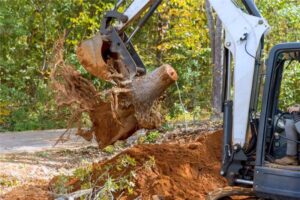
The same practical thinking applies afterward. Once a tree is removed, Stump Removal & Grinding may be needed for replanting, access, or to restore the use of the site. That may sound separate from the topic of structural support, but it is part of the same decision chain. Every retained tree competes with a basic question: is management still practical, or is replacement the better long-term choice?
An arborist who handles both support evaluations and removals tends to see this more clearly. There is less incentive to force every tree into the “save it” category. Some trees merit preservation effort. Others do not. The skill lies in telling the difference.
Why pruning still does most of the heavy lifting
For all the interest structural support attracts, pruning remains the more foundational treatment in modern tree care. Support may address a specific weak point, but pruning shapes how the whole canopy behaves. It can reduce load, improve spacing, remove broken or competing limbs, and steer growth over time. When done well, it influences both structure and risk without the false promise of making a tree hazard-free.
That is why Tree Pruning & Crown Shaping should almost always be part of the conversation when support is proposed. A cable placed into a tree with an overextended crown and multiple competing leaders solves very little if the canopy above it still behaves poorly in wind. The support may help with one mode of failure while leaving another untouched.
On the other hand, pruning without regard to structural defects can be equally incomplete. A light reduction in canopy weight may help, but not enough to address a known weak union in a valuable tree over a high-use target. In those cases, support adds another layer of mitigation.
The best work usually feels Go here coordinated rather than isolated. The arborist looks at structure, growth pattern, previous pruning history, site conditions, and target use, then builds a management recommendation from there.
What property owners should expect from the decision process
Good recommendations are usually clear about both benefits and limits. If a support system is suggested, the explanation should connect directly to an observed concern and a practical outcome. It should not sound vague. It should not rely on fear. And it should not suggest permanence where regular inspection is still necessary.
Property owners should also expect the possibility that more than one path is reasonable. A tree might be retained with structural support and periodic re-evaluation. It might also be removed and replaced, especially if the defect is significant and the site has little tolerance for risk. Both options can be professionally sound depending on the circumstances.
A useful consultation often covers several points:
- What defect or structural concern has been identified
- How that concern relates to likely failure and potential targets
- Whether pruning, support, monitoring, or removal offers the most practical risk reduction
- What future inspections or maintenance would still be needed
- Whether the tree’s value justifies continued intervention
That kind of conversation does not eliminate uncertainty, because tree care never does. What it does is replace blanket advice with case-specific judgment.
Structural support in fire-prone and risk-sensitive landscapes
Some sites bring additional considerations. In fire-prone regions, for example, FireSmart Tree Services focus attention on how vegetation is managed around structures and access routes. The priorities in those landscapes can differ from a typical ornamental retention decision. Crown spacing, fuel continuity, branch height, and defensible-space goals may all influence whether a tree should be retained, pruned, or removed.
Structural support can still have a place, but only if it aligns with the larger site objective. A tree that requires extensive intervention and still complicates clearance around a building may not be the best candidate for long-term retention. By contrast, a high-value tree that contributes shade or screening and can be managed through prudent pruning and support may remain worth keeping.
The larger lesson is that support systems do not exist in isolation. They have to make sense within the operational goals of the property, whether that means occupant safety, access, preservation, or wildfire preparedness.
The human side of retaining a flawed tree
One thing that becomes obvious after enough years around clients is that support decisions are rarely just technical. Trees carry memory. They mark property lines, shade patios, frame homes, and outlast renovations. When a mature tree develops a structural issue, the owner is often weighing more than cost or risk. They are deciding whether to let go of a living part of the property’s identity.
That emotional layer can distort judgment, but it can also sharpen it. A family may be willing to commit to ongoing inspection and maintenance because a tree genuinely matters to them. Another owner may prefer removal because they do not want a recurring management obligation over a driveway or play space. Neither response is irrational. What matters is that the recommendation be honest about what support can and cannot accomplish.
In my experience, the most satisfied clients are not always the ones who keep the tree. They are the ones who understand the trade-off. If a supported tree remains in place, they know it still needs future attention. If it comes down, they know the decision was made for a reason, not because no one wanted to think through alternatives.
When modern care means saying no to support
There is a mature professionalism in declining to install a support system when it is unlikely to solve the real problem. That may frustrate property owners who hoped for a simple answer, but it is part of ethical tree care. A flawed tree cannot be preserved indefinitely by hardware alone, especially if the underlying condition does not support retention.
This is where Dangerous Tree Assessment and Removal becomes essential. Risk assessment is not a theatrical exercise. It is a disciplined process to identify and evaluate risk, then recommend measures that achieve an acceptable level of safety without unnecessary intervention. Sometimes that leads to pruning and support. Sometimes it leads to removal. Both outcomes belong within modern arboriculture.
The same professional restraint applies after a tree has failed. Not every damaged tree should be pieced back together. Some should be removed cleanly, the site made safe, and the stump addressed through Stump Removal & Grinding if future use requires it. Tree care includes preservation, but it also includes decisive closure when preservation no longer serves the site.
A practical way to think about the role of support
The clearest way to understand structural support systems is to place them in sequence rather than in isolation.
First comes assessment, ideally through Certified Arborist Consultation and a systematic look at risk. Then comes canopy management through proper Tree Pruning & Crown Shaping, because structure and load matter. After that, if a specific weakness remains in an otherwise retainable tree, Tree Cable and Bracing may be part of the plan. If the risk still cannot be brought down sufficiently, Tree Removal Services become the right next step, sometimes followed by Stump Removal & Grinding. If the concern emerges after failure or storm damage, Emergency Tree Services may shape the timeline. And if the property sits in a fire-sensitive area, FireSmart Tree Services may influence the decision at every stage.
That is how support systems fit into modern tree care. Not as a dramatic rescue measure, and not as a routine upsell, but as one disciplined option among several. Their value lies in precision. They are useful when the tree, the defect, the target, and the management goals all line up. Outside those conditions, the better answer is often simpler, and sometimes harder.
The profession has moved steadily toward that more measured view. Trees are living structures, not static landscape features. They change, decay, respond, and sometimes fail. The work is to manage those realities responsibly. Structural support systems earn their place when they help do exactly that, no more and no less.
Name: Ace Tree Services Ltd.
Address: 4656 Wallace Hill Road, Kelowna, BC
Phone: 250-212-9593
Website: https://acetree.ca/
Hours:
Monday: 7:00 AM–5:00 PM
Tuesday: 7:00 AM–5:00 PM
Wednesday: 7:00 AM–5:00 PM
Thursday: 7:00 AM–5:00 PM
Friday: 7:00 AM–5:00 PM
Saturday: 7:00 AM–5:00 PM
Sunday: Closed
Emergency tree services: 24/7 emergency service is listed.
Open-location code / Plus code: RHF8+8G Kelowna, British Columbia, Canada
Map/listing URL: https://www.google.com/maps/place/Ace+Tree+Services+Ltd./@49.8232606,-119.4337283,563m/data=!3m1!1e3!4m6!3m5!1s0x537d8b1d074815c5:0x450b88afa7a41435!8m2!3d49.8232606!4d-119.4337283!16s%2Fg%2F11ydkpnh22
Embed iframe:
Socials: https://www.facebook.com/people/Ace-Tree-Services/61585901931447/
https://m.yelp.com/biz/ace-tree-services-kelowna
Ace Tree Services Ltd. provides professional tree service for residential, commercial, and municipal customers in Kelowna and across the Okanagan Valley.
The company’s listed services include tree removal, stump removal and grinding, tree pruning and crown shaping, emergency tree services, certified arborist consultation, dangerous tree assessment, tree cable and bracing, and wildfire mitigation.
Ace Tree Services works with homeowners, businesses, property managers, and public-sector clients that need safe, practical tree care in the Kelowna area.
The official site highlights ISA-certified arborists, insurance, and experience handling both routine and complex tree service situations.
Customers can contact Ace Tree Services for tree care planning, hazard concerns, emergency tree cleanup, pruning needs, stump grinding, or advice about trees near homes, fences, driveways, and landscaping.
Ace Tree Services lists regular work hours from 7:00 AM to 5:00 PM Monday through Friday, with 24/7 emergency tree service available for urgent situations.
For tree service in Kelowna, call 250-212-9593 or visit https://acetree.ca/
The public map listing places Ace Tree Services Ltd. in Kelowna and can help customers find directions to the Wallace Hill Road area.
Popular Questions About Ace Tree Services Ltd.
What services does Ace Tree Services Ltd. provide?
Ace Tree Services Ltd. provides tree removal, stump removal and grinding, tree pruning and crown shaping, emergency tree services, certified arborist consultation, dangerous tree assessment and removal, tree cable and bracing, and wildfire mitigation.
Where is Ace Tree Services Ltd. located?
The official website lists Ace Tree Services Ltd. at 4656 Wallace Hill Road, Kelowna, BC.
What areas does Ace Tree Services Ltd. serve?
The official website describes Ace Tree Services as located in Kelowna and servicing the Okanagan.
What phone number should customers call?
Customers can call Ace Tree Services Ltd. at 250-212-9593.
What are Ace Tree Services Ltd.’s regular hours?
The official website lists work hours as 7:00 AM to 5:00 PM, Monday through Friday. Saturday and Sunday regular hours are not listed and should be confirmed directly.
Does Ace Tree Services Ltd. offer emergency tree service?
Yes. The official website lists 24/7 emergency services for urgent tree situations, including emergency tree removal, dangerous tree assessment, stabilization, and limb or branch cleanup.
Does Ace Tree Services Ltd. have certified arborists?
Yes. The official website states that Ace Tree Services has ISA-certified arborists.
Can Ace Tree Services Ltd. help with wildfire mitigation?
Yes. Wildfire mitigation is listed as one of the company’s tree services.
How do I contact Ace Tree Services Ltd.?
Call 250-212-9593 or visit https://acetree.ca/.
Landmarks Near Kelowna, BC
Wallace Hill Road: A local Kelowna road near the address listed for Ace Tree Services Ltd.
Okanagan Lake: A major Kelowna landmark near residential, commercial, and waterfront properties that may need tree pruning, removal, or hazard assessment.
Downtown Kelowna: A central area with homes, offices, rental properties, restaurants, and commercial sites that may need professional tree care.
Mission / Lower Mission: A well-known Kelowna area with mature landscaping, residential properties, and lake-adjacent homes.
South East Kelowna: A rural and residential area with larger properties, orchards, and tree-care needs that can include pruning, removals, and wildfire mitigation.
Crawford: A residential area near the southeast side of Kelowna where homeowners may need tree trimming, hazard assessment, and stump grinding.
Kettle Valley: A hillside residential neighborhood where tree condition, slope, wind exposure, and defensible-space planning can matter for property owners.
Myra-Bellevue Provincial Park: A major outdoor landmark near southeast Kelowna and a useful point of orientation for nearby properties.
Gallagher’s Canyon: A residential and golf community near southeast Kelowna where tree maintenance and wildfire-conscious vegetation management can be practical concerns.
Orchard Park Shopping Centre: A major central Kelowna retail landmark and reference point for customers traveling across the city.
Highway 97: A major Kelowna corridor connecting neighborhoods, commercial properties, and service routes throughout the region.
Kelowna City Park: A recognizable central landmark near downtown neighborhoods and lakefront properties.
Glenmore: A Kelowna neighborhood with residential and commercial properties that may need pruning, storm cleanup, and general tree care.
Rutland: A large residential and commercial area where customers may need tree removal, pruning, stump grinding, or arborist consultation.
Black Mountain: A hillside community where slope, wind, wildfire exposure, and access can influence tree service planning.
For tree service near these Kelowna landmarks, contact Ace Tree Services Ltd. at 250-212-9593 or visit https://acetree.ca/