How Tree Removal Services Work From Inspection to Cleanup
Tree removal looks simple from the curb. A crew arrives, ropes go up, branches come down, a trunk disappears, and the yard somehow returns to order by late afternoon. From a homeowner’s perspective, it can seem like brute force and chainsaws. From the inside, the process is much more deliberate. Good tree work is a sequence of judgment calls, safety controls, and cleanup standards that start well before the first cut.
Over the years, one pattern shows up again and again. The trees that come down smoothly are not always the smallest ones. They are the ones assessed carefully, planned realistically, and handled by people who know when to cut, when to rig, and when to stop. That is true whether the job involves routine Tree Removal Services for a declining maple, Dangerous Tree Assessment and Removal after storm damage, or Emergency Tree Services when a split oak is hanging over a driveway.
If you have never hired a tree company before, it helps to know what happens at each stage. The details matter. They affect cost, timing, property protection, and whether the job solves the underlying problem or just removes the visible part of it.
The first visit is not a sales pitch, it is a diagnosis
A professional tree removal job begins with inspection. Sometimes that inspection lasts fifteen minutes. Sometimes it stretches longer because the answer is not obvious. A leaning tree is not automatically dangerous, and a tree with dead limbs is not automatically doomed. Species, root condition, prior pruning, soil moisture, storm history, target zones, and structural defects all shape the recommendation.
This is where a Certified Arborist Consultation can be especially valuable. A trained arborist does more than identify the species and estimate the height. They look for included bark in branch unions, signs of fungal decay around the root flare, cavities, cracks, codominant stems, heaving soil, girdling roots, and previous topping cuts that created weak regrowth. They also consider site use. A tree overhanging a back fence is one thing. The same tree over a nursery, a garage, or a main power service is another.
In practice, many homeowners call because they notice one alarming symptom. It might be mushrooms at the base, bark falling off one side, or a sudden lean after a week of rain. A good inspector connects that symptom to the bigger picture. For example, a mature pine shedding some bark plates may be normal. A mature ash with thinning canopy, woodpecker activity, and bark loss in regions affected by emerald ash borer is a different conversation entirely.
The inspection also distinguishes between removal and alternatives. Not every high-risk tree needs to come down immediately. In some cases, Tree Pruning & Crown Shaping can reduce end weight, clear structures, and remove deadwood while preserving the tree. In others, Tree Cable and Bracing can support a weak union and buy time for a valued specimen. Those measures are not cosmetic extras. When used appropriately, they can be the difference between retaining a tree safely and losing it unnecessarily.
When removal is recommended, the reason should be specific
Homeowners deserve a clear explanation for why a tree should be removed. “It might be dangerous” is not enough. The best tree companies explain the actual defect, the likely failure pattern, and the target that could be hit if failure occurs.
Some of the most common reasons include advanced decay, severe storm damage, root failure, irreversible pest decline, construction impacts, or proximity conflicts with foundations, roofs, utility lines, and fire-prone vegetation zones. In wildfire-prone regions, Wildfire Mitigation Tree Services often focus on removing ladder fuels, dead conifers, and trees too close to structures. That work is not simply about aesthetics or defensible space on paper. It is about reducing ember pathways and radiant heat intensity around the home.
A responsible company will also tell you when urgency is high. A fully dead tree in an open back lot may be stable enough to schedule normally. A half-uprooted tree resting on another canopy after a windstorm is a very different level of risk. One job can wait for next week’s route. The other may call for same-day Emergency Tree Services.
Access and site conditions shape the entire plan
After the tree’s condition is evaluated, attention shifts to the work area. This part surprises people because two trees of the same size can require completely different approaches depending on where they stand.
A 60-foot tulip poplar in an open front yard with clear drop zones may be removed quickly with a bucket truck and straightforward sectioning. The same species behind a pool, hemmed in by fencing, garden beds, and overhead conductors, becomes a rigging job. If a crane cannot reach, climbers may dismantle it piece by piece. If the backyard gate is narrow, even hauling wood out becomes labor-intensive.
Crews study slope, soil firmness, irrigation lines, septic fields, retaining walls, patios, underground utilities, bee or wasp activity, and traffic flow. Wet ground changes how heavy equipment is used. Tight urban lots may require street permits and traffic control. In some municipalities, tree protection ordinances or removal permits apply, especially for heritage trees or trees above a certain diameter.
This planning phase is where experienced companies earn their keep. The safest cut is not always the fastest cut, and the fastest cut is not always possible. A well-run crew knows how to match the method to the site rather than forcing the site to fit Get more info the equipment they happen to own.
Estimating the job is more technical than most people realize
Price often looks mysterious from the outside, but it usually comes down to labor, risk, equipment, disposal, and complexity. Height matters, but not in isolation. Diameter, wood weight, spread, species brittleness, climbing difficulty, and the amount of rigging all affect the estimate. So does cleanup.
A large tree can be removed in several service levels. One homeowner wants everything hauled away, the stump ground below grade, surface roots cut back, and the site raked clean. Another only wants the trunk on the ground and the wood left in sections for firewood. Those are different jobs, and the pricing should reflect that.
Stump Removal & Grinding is often quoted separately because it involves different equipment and a different result. Grinding removes the visible stump and turns it into mulch-like chips, usually below soil level by several inches, sometimes deeper if replanting or hardscaping is planned. It does not remove every lateral root. Full root excavation is a bigger undertaking and typically only makes sense when foundations, utilities, or new construction require it.
If you receive multiple bids, compare scope as carefully as price. One quote may include debris hauling, log removal, traffic control, and stump grinding. Another may not. On paper they can look close. In the yard, they are miles apart.
The work plan comes together before saws start
Once the job is approved, the crew develops a removal sequence. This is the part homeowners rarely see, but it determines whether the day feels controlled or chaotic.
The crew leader identifies drop zones, tie-in points, escape routes, equipment staging areas, and the order in which limbs and trunk sections will be removed. They decide whether the tree can be felled in one piece, blocked down vertically, or dismantled with ropes and lowering devices. Nearby structures, landscape features, and utility hazards all feed into that choice.
Communication matters here. Good crews discuss hand signals, rope commands, chipper placement, and who is responsible for watching the work area. It is not glamorous, but it prevents mistakes. I have seen jobs where ten minutes of planning avoided hours of property repair. I have also seen rushed crews break fence panels because nobody established where brush would be dragged or where logs would swing under tension.
A homeowner can often tell a lot by the first twenty minutes on site. If the team walks the property, marks the path of travel, and protects vulnerable surfaces, that is a strong sign. If they start pulling saws immediately without reviewing the setup, that is worth noticing.
How the tree is actually removed
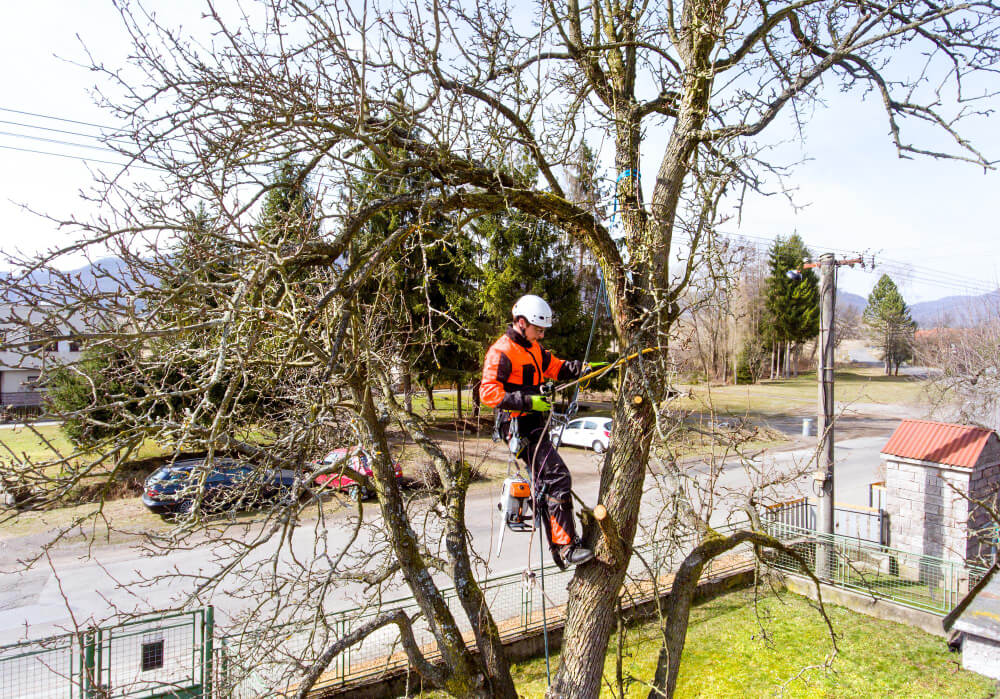
The removal method depends on the site, but the sequence usually starts at the crown and works downward when targets are nearby. The climber or bucket operator removes outer branches first, reducing weight and creating space. Limbs may be free-dropped into a safe zone or lowered under control with ropes. Larger pieces are cut with careful attention to balance, hinge wood, and swing potential.
In confined spaces, rigging is what protects everything beneath the tree. A branch that weighs only a few hundred pounds can generate much higher dynamic force if it falls uncontrolled and snatches the line. That is why experienced rigging crews choose anchor points carefully and manage friction through lowering devices. They are not just lowering wood, they are managing physics in real time.
Trunk wood comes next. If there is room, the stem may be felled after the crown is stripped. If not, it is cut into manageable blocks and lowered or dropped section by section. Species characteristics matter. Brittle dead ash behaves differently from green oak. Tall eucalyptus can surprise inexperienced cutters because of weight, fiber behavior, and the way long stems move under load.
There are edge cases that require unusual care. A storm-split tree can hold hidden tension that releases violently when cut. A tree growing into another canopy can remain suspended in ways that look stable from the ground but are anything but. In Dangerous Tree Assessment and Removal work, the visible defect is sometimes only half the story. The hidden forces inside the wood are the real challenge.
Emergency work changes the tempo, not the standards
Emergency Tree Services often happen after wind, ice, saturated soil, or lightning. In those moments, people are stressed, access is messy, and everyone wants immediate action. The pressure is real, but the fundamentals do not change. Safety, stabilization, and controlled removal still come first.
The difference is that emergency jobs usually begin with hazard isolation. The crew may secure the area, keep residents clear, coordinate with utility providers if lines are involved, and remove only the portions necessary to eliminate immediate danger before returning for full cleanup. A tree on a roof is a good example. The first objective is to prevent additional collapse or shifting, not to make the yard pretty.
Emergency pricing can be higher for understandable reasons. After-hours response, storm demand, extra rigging, and unstable conditions all increase labor and risk. That said, a reputable company should still explain the scope clearly, especially when homeowners are making fast decisions under stress.
Not every problem ends with removal
One of the marks of a trustworthy company is restraint. There are times when the best answer is to keep the tree and manage the risk. Tree Pruning & Crown Shaping can reduce sail effect in wind, remove dead or broken limbs, and improve spacing in overloaded crowns. That does not “fix” structural decay, but it can extend the safe life of a healthy tree with correctable issues.
Tree Cable and Bracing is another tool that gets overlooked. When a mature ornamental or shade tree has a weak fork but strong overall vitality, cabling can reduce the chance of stem separation. Bracing rods may be installed in split or compromised unions to add support. These systems are not permanent guarantees and they require follow-up inspection, but in the right case they preserve canopy value that would otherwise be lost.
This matters because mature trees provide real benefits. Shade lowers heat load on a house. Root systems stabilize soil. Privacy and habitat improve the site in ways a new sapling cannot replace for decades. Removal is sometimes necessary, but it should not be the automatic answer to every defect.
Stump grinding is its own phase, with its own decisions
After the trunk is gone, the stump remains. Some homeowners choose to leave it temporarily. Others want it gone the same day. Stump Removal & Grinding usually happens after the main tree is removed, once the grinder can access the spot safely.
The grinder chews the stump into small chips using a spinning cutter wheel. The depth depends on the plan for the area. For turf restoration, shallow to moderate grinding is often enough. For replanting, patios, or new walkways, deeper grinding and some root reduction may be needed. Large buttress roots near the surface may still create grade issues if not addressed.
One practical note catches people off guard. Grinding creates a sizable pile of chips and mixed soil. Some companies leave that material on site to settle into the hole. Others haul it away and backfill with topsoil at added cost. Neither is inherently wrong, but the expected finish should be discussed ahead of time.
If the removed tree was diseased, replacement planning also matters. Certain root pathogens persist in soil or woody residue. In those cases, species selection for replanting should be thoughtful rather than impulsive.
Cleanup is where professionalism becomes visible
A lot of companies can cut wood. Fewer finish a site well. Cleanup is not an afterthought, and it is often the part clients remember most.
Brush is chipped, logs are hauled or stacked as agreed, sawdust is raked, and small debris is collected from beds, lawns, and hardscape joints. If heavy equipment crossed turf, the crew may do some basic smoothing, though significant lawn repair is usually separate. Good teams also check for stray rope fibers, fuel drips, and minor branch fragments that migrate farther than expected during the work.
The best cleanup has a practical standard: if a child can run barefoot through the area without finding wood slivers and cut stubs, the crew paid attention. That standard is not always realistic in rough woodland removals, but in maintained residential landscapes, it is a useful benchmark.
Here are a few things homeowners should clarify before the job starts:
- whether all wood and chips will be removed or left on site
- whether stump grinding is included, and to what depth
- whether surface roots, backfilling, and seed or sod repair are part of the quote
- whether the crew will protect irrigation, pavers, fences, and delicate plantings
- whether permits or utility coordination are needed
Those small questions prevent most of the misunderstandings that lead to frustration later.
Timing depends on more than tree size
People often ask how long removal will take. The honest answer is that duration depends less on the tree’s appearance than on complexity. A very large tree with excellent access may be finished in a day. A medium-sized tree over a glass sunroom may take just as long.
The Tree Pruning & Crown Shaping main variables usually look like this:
- access for trucks, cranes, or stump grinders
- the amount of rigging required to protect nearby targets
- tree condition, especially decay, brittleness, or storm damage
- disposal volume, including brush, trunk wood, and stump debris
- weather, ground conditions, and permit or utility constraints
Rain can slow work even when the crew is willing to proceed. Wet lawns rut easily under loaders. Wind affects climber safety and crane picks. Heat changes crew rotation and saw performance. None of that means the company is making excuses. It means they are working in the real conditions the site gives them.
What homeowners can do to help the job go smoothly
You do not need to become a tree worker to prepare for removal day, but a little coordination helps. Move vehicles away from the work zone. Keep pets indoors. Let neighbors know if access near property lines will be affected. If the crew needs a driveway or gate code, provide it the day before, not after everyone arrives.
It also helps to decide in advance what you want preserved. If there is a favorite shrub under the canopy, mention it. If firewood lengths matter, specify that. If newly installed irrigation runs through the stump area, point it out before grinding starts. Many site problems happen not because crews are careless, but because they were never told what mattered most to the homeowner.
The value of judgment is easy to miss until something goes wrong
Tree removal sits at an odd intersection of horticulture, heavy equipment, rope work, and risk management. It is easy to underestimate because the final result is subtraction. The tree is gone, so people assume the work was straightforward. But the quality of tree work is often measured by what did not happen. No roof damage, no torn lawn beyond what was unavoidable, no dropped limbs through a fence, no worker injuries, no half-finished stump, no debris left behind.
That is why the full process matters, from inspection to cleanup. Tree Removal Services are not just about cutting. They involve diagnosis, planning, execution, and site restoration. Sometimes the right path includes Dangerous Tree Assessment and Removal. Sometimes it calls for Tree Pruning & Crown Shaping, Tree Cable and Bracing, or a broader Certified Arborist Consultation before any final decision is made. In fire-prone areas, Wildfire Mitigation Tree Services may frame the entire project. And when weather changes everything overnight, Emergency Tree Services bring order back to a situation that can feel unstable and urgent.
A well-run tree job should leave more than an empty space where the tree stood. It should leave clarity. You should know why the work was done, how risks were managed, what was removed, what remains, and what comes next for the site. That is the difference between a crew that merely cuts trees and a professional service that manages them properly.
Name: Ace Tree Services Ltd.
Address: 4656 Wallace Hill Rd, Kelowna, BC V1W 4C2, Canada
Phone: 250-212-9593
Website: https://acetree.ca/
Email: [email protected]
Hours:
Sunday: Closed
Monday: 7:00 AM–5:00 PM
Tuesday: 7:00 AM–5:00 PM
Wednesday: 7:00 AM–5:00 PM
Thursday: 7:00 AM–5:00 PM
Friday: 7:00 AM–5:00 PM
Saturday: 7:00 AM–5:00 PM
Time zone: Pacific Time
Open-location code / Plus code: RHF8+8G Kelowna, British Columbia, Canada
Map/listing URL: https://www.google.com/maps/search/?api=1&query=Google&query_place_id=ChIJxRVIBx2LfVMRNRSkp6-IC0U
Embed iframe:
Socials:
https://www.facebook.com/p/Ace-Tree-Services-61585901931447/
Ace Tree Services Ltd. provides professional tree care from its Kelowna location on Wallace Hill Road.
The official website lists tree removal, stump removal and grinding, tree pruning and crown shaping, emergency tree services, certified arborist consultation, dangerous tree assessment and removal, tree cabling and bracing, and wildfire mitigation.
Ace Tree Services serves homeowners, businesses, and property owners in Kelowna and throughout the Okanagan Valley.
The company’s official site highlights ISA Certified Arborist support, local Okanagan experience, and fully insured tree service work.
Customers can contact Ace Tree Services for planned tree maintenance, high-risk removals, storm-related tree concerns, pruning, stump grinding, and arborist consultation needs.
The supplied public listing address is 4656 Wallace Hill Rd, Kelowna, BC V1W 4C2, near rural and residential service areas in southeast Kelowna.
For tree services in Kelowna and the Okanagan, call 250-212-9593, email [email protected], or visit https://acetree.ca/
The public map listing uses plus code RHF8+8G Kelowna, British Columbia, Canada and can help customers find Ace Tree Services Ltd. near Wallace Hill Road.
Popular Questions About Ace Tree Services Ltd.
What does Ace Tree Services Ltd. do?
Ace Tree Services Ltd. provides tree removal, stump removal and grinding, tree pruning and crown shaping, emergency tree service, certified arborist consultation, dangerous tree assessment and removal, tree cabling and bracing, and wildfire mitigation.
Where is Ace Tree Services Ltd. located?
Ace Tree Services Ltd. is listed at 4656 Wallace Hill Rd, Kelowna, BC V1W 4C2, Canada.
What phone number should customers call?
Customers can call Ace Tree Services Ltd. at 250-212-9593.
What is the email address for Ace Tree Services Ltd.?
The supplied email address is [email protected].
What are Ace Tree Services Ltd.’s hours?
The supplied listing hours show Monday through Saturday from 7:00 AM to 5:00 PM, with Sunday closed, Pacific Time. The official website lists 7:00 AM to 5:00 PM, Monday through Friday, so customers should confirm Saturday availability before booking.
Does Ace Tree Services Ltd. provide emergency tree service?
Yes. The official website lists emergency tree services, including emergency tree removal, dangerous tree assessment, emergency stabilization, and limb or branch cleanup.
Does Ace Tree Services Ltd. offer arborist consultations?
Yes. The official services page lists certified arborist consultation as one of the company’s Okanagan tree services.
Does Ace Tree Services Ltd. provide stump grinding?
Yes. The official services page lists stump removal and grinding as a service.
What areas does Ace Tree Services Ltd. serve?
The official website states that Ace Tree Services serves Kelowna and the Okanagan Valley.
How do I contact Ace Tree Services Ltd.?
Call 250-212-9593, email [email protected], visit https://acetree.ca/, or use the listed social profile: Facebook.
Landmarks Near Kelowna, BC
Wallace Hill Road: The road listed for Ace Tree Services Ltd. and a practical reference point for the company’s Kelowna location.
East Kelowna: A nearby rural and residential area where tree maintenance, pruning, removals, and wildfire mitigation can be important for property owners.
Myra-Bellevue Provincial Park: A major outdoor landmark southeast of Kelowna and a useful reference for the surrounding hillside and forested areas.
Gallagher’s Canyon: A nearby Kelowna community with residential properties, mature trees, and landscape maintenance needs.
Kettle Valley: A southeast Kelowna neighborhood with homes, parks, and landscaped properties.
Mission Creek Greenway: A well-known natural corridor in Kelowna and a local reference point for tree-lined recreation areas.
Orchard Park Shopping Centre: A major Kelowna retail landmark and citywide reference point.
Downtown Kelowna: A central business and residential district within Ace Tree Services’ broader Kelowna service area.
Okanagan Lake: A major regional landmark running through Kelowna and the surrounding Okanagan Valley.
Mission Creek Regional Park: A recognizable Kelowna park and natural landmark with extensive trees and trails.
Rutland: A large Kelowna community with residential and commercial properties that may need tree service support.
Glenmore: A Kelowna neighborhood with homes, parks, and established trees.
Lower Mission: A residential and lake-adjacent Kelowna area where pruning, tree health, and property safety can matter for homeowners.
Kelowna International Airport: A major transportation landmark north of central Kelowna.
West Kelowna: A nearby Okanagan community across the lake and a practical regional service reference.
For tree removal, stump grinding, pruning, crown shaping, emergency tree service, arborist consultation, dangerous tree assessment, cabling and bracing, or wildfire mitigation near these Kelowna and Okanagan landmarks, contact Ace Tree Services Ltd. at 250-212-9593, email [email protected], or visit https://acetree.ca/