Tree Cable and Bracing as Structural Support in Arboriculture
Tree structure is rarely as simple as it looks from the ground. A broad canopy, a dramatic lean, a forked trunk, or a long lateral limb can all be perfectly normal, or they can be signs that a tree needs help carrying its own weight. That is where tree cable and bracing enter the conversation. In arboriculture, these systems are not cosmetic add-ons. They are structural support measures used to reduce the chance of failure in trees that have value worth preserving.
Homeowners often assume the choice is binary: keep the tree as it is, or remove it. In practice, experienced arborists spend much of their time working in the space between those two options. Pruning can reduce load. Crown shaping can improve balance. A support system can help limit movement in a weak union or overextended limb. In higher-risk situations, especially where a target sits below the tree, the better answer may still be Dangerous Tree Assessment and Removal. Good arboriculture depends on judgment, not slogans.
That judgment matters because no tree is completely free of risk. Trees are living structures that grow, flex, shed limbs, and respond to weather. Risk work in arboriculture is not about promising absolute safety. It is about identifying defects or weak points, understanding likely failure scenarios, and recommending treatments that move risk toward an acceptable level without unnecessary intervention. Tree Cable and Bracing belongs firmly in that risk reduction toolbox.
What cable and bracing are meant to do
At its core, a support system helps a tree hold together under load. The need often comes up when a tree has a structural weakness but still provides enough landscape, ecological, or sentimental value that preserving it makes sense. In some cases, the issue is a codominant stem, meaning two major stems share a union that may be more vulnerable than a single dominant trunk. In others, the problem is a heavy lateral branch over a driveway, patio, roofline, or pedestrian area.
Cabling is generally intended to limit excessive movement between structural parts of a tree. Bracing, as the name suggests, adds reinforcement where a union or stem needs more direct support. Arborists consider these systems alongside pruning because structural support without load reduction can leave too much force in the canopy. Likewise, aggressive cutting without understanding the tree’s architecture can create new problems. The best results usually come from combining support with thoughtful Tree Pruning & Crown Shaping.
A mature tree with a broad crown may be able to remain in place for years with proper monitoring Tree Pruning & Crown Shaping and maintenance. A similar tree, growing over a play area or next to a house, may call for a more conservative recommendation. That is why support systems are not sold responsibly as standard upgrades. They are prescribed case by case.
The assessment comes first
Before anyone talks about hardware, the first step is a careful inspection. ISA describes tree risk assessment as a systematic process to identify, analyze, and evaluate risk, then recommend measures to achieve an acceptable level of risk. That framework is essential. Support systems make sense only after the arborist has a clear picture of the tree’s structure, condition, and site use.
A proper assessment considers the visible structure of the crown and stem, likely failure points, and what sits beneath the tree. A long branch over open lawn is one thing. The same branch over a nursery, parking area, or front entrance is something else entirely. The tree’s species and age may influence management decisions, but the visible condition and the occupancy of nearby targets often drive urgency.
This is where a Certified Arborist Consultation is worth its weight in time and money. ISA Certified Arborists are trained in the art and science of tree care, must pass a comprehensive exam, continue their education, and adhere to a code of ethics. In real work, that shows up as restraint as much as expertise. A skilled arborist does not jump straight to cabling because a tree looks dramatic. They inspect, ask questions, and explain what support can and cannot accomplish.
In my experience, the best consultations often involve disappointing someone a little. The homeowner wants certainty, but arboriculture rarely offers it. A support system can reduce the likelihood of a branch or union failing. It cannot turn a compromised tree into a risk-free object. That distinction is not just technical, it is ethical.
Trees that may be candidates for support
Not every defect can be managed with hardware, and not every dramatic-looking tree is a bad one. The strongest candidates are usually trees with a localized structural concern rather than global decline. If the main issue is a weak union, an overextended limb, or movement that could be moderated, support may be part of a sensible plan.
Typical scenarios include the following:
- A mature shade tree with codominant stems that form a union of concern above a home, driveway, or gathering space.
- A long lateral limb that contributes heavily to the tree’s form and value but places excessive load over a target area.
- A tree with a notable structural weakness that remains otherwise healthy enough to justify preservation efforts.
- A specimen tree with strong landscape value where pruning alone would remove too much canopy or character.
- A post-storm situation where Emergency Tree Services identify a branch or stem that may be retained safely only with follow-up support and pruning.
Each of those examples still requires case-by-case review. A codominant stem can sometimes be managed by reduction pruning. A long branch can sometimes be shortened enough that a cable is unnecessary. In other cases, the visible issue is only the surface expression of deeper instability, and Tree Removal Services become the more responsible recommendation.
When support is the wrong answer
This is the part many articles skip, but it matters. Tree cable and bracing are not rescue devices for every compromised tree. If a tree has broader failure potential, support hardware can give false confidence. Arborists owe clients clarity on that point.
A tree that is in poor condition overall may not be a good candidate for preservation. If the concern is not isolated to a branch or union, but instead reflects larger instability or multiple hazards, propping up one area does not solve the real problem. Dangerous Tree Assessment and Removal is sometimes the right call, even when the tree has emotional value. That can be difficult to hear, especially with mature trees that anchor a property visually.
The same principle applies after storm damage. Emergency Tree Services are often called when people are frightened, sleep-deprived, and staring at a tree that was fine the day before. In that setting, a calm assessment matters. Some damaged trees can be retained through pruning, controlled load reduction, and a support plan. Others have crossed a line where removal is safer and more practical. The hard part is that these decisions are not made from sentiment or appearance alone. They are made from risk.
Support is also the wrong answer when it is used as a substitute for maintenance. A neglected canopy with crowded growth, poor pruning history, or unbalanced weight distribution may need proper Tree Pruning & Crown Shaping before anyone can even judge whether hardware would help.
Cabling works best as part of a larger management plan
The public often imagines cabling as a one-time fix. Arborists know better. Structural support should be treated as one component of ongoing care. A cable does not stop a tree from growing. It does not erase the need for periodic inspection. And it does not reduce every kind of load equally, because wind, snow, and growth patterns are dynamic.
That is why pruning and support are so closely linked. ISA pruning guidance emphasizes proper branch removal and reduction cuts, directional pruning, and warns against harmful practices such as topping and stub cuts. Those principles matter here. If a heavy branch needs less end weight, proper reduction can help preserve its role in the canopy while easing the forces placed on a weak attachment point. Done poorly, the same attempt can stimulate undesirable regrowth, create weakly attached shoots, or leave the branch more vulnerable than before.
A good arborist reads the crown structurally. They ask where the weight sits, how movement transfers through the union, what can be reduced without disfiguring the tree, and whether support changes the risk profile enough to justify retention. Those are not academic questions. They shape whether the tree remains a valued asset or becomes a recurring liability.
I have seen homeowners request the most visible, dramatic intervention because it feels substantial. Yet some of the most effective work in mature trees is subtle. A modest reduction in a long limb, a better load path through selective pruning, and a support system placed only where needed can accomplish more than aggressive cutting ever could.
Why credentials matter in structural support work
There is a practical reason ISA and other industry guidance stress training and safety. Pruning or removing trees, especially large trees, is dangerous work and should be handled by people trained and equipped to work safely in trees. The same is true for structural support installation. This is not handyman work and it is not a DIY weekend project.
A support system must begin with a sound assessment, but it also depends on safe access, controlled movement in the canopy, and an understanding of rigging and controlled lowering when limbs are being pruned or repositioned. Tree work frequently combines climbing, aerial access, rigging, and careful handling of heavy wood. When support installation is bundled with reduction pruning, the crew’s work quality matters as much as the recommendation itself.
A Certified Arborist Consultation is especially valuable when a tree stands near homes, utility corridors, traffic areas, or spaces with regular public use. In those settings, the consequences of a poor recommendation are higher. Professional ethics also matter. An arborist should explain not only why a support system is recommended, but also its limitations, the need for follow-up inspections, and any alternative paths, including removal.
Support systems and the economics of preservation
Tree preservation always has a financial side, though people do not always say it aloud. A property owner may be deciding between ongoing maintenance and a single major removal. There is no universal answer. Some trees merit the investment because of shade, privacy, design value, or long attachment. Others become expensive to maintain relative to their expected lifespan or risk profile.
This is one reason Tree Removal Services continue to be an essential part of honest arboriculture. Preservation is not automatically the more responsible recommendation. If a tree requires repeated intervention, presents a persistent target issue, or cannot be brought to an acceptable risk level, removal may be the more practical choice. When that happens, Stump Removal & Grinding often follows to restore usable space and make replanting possible.
That said, removal should not be the default answer to every structural concern. Mature trees cannot be replaced quickly. A well-managed support plan may preserve decades of landscape value. The point is to compare options clearly. A homeowner deserves to understand whether the proposed work is stabilizing a valuable tree with a manageable issue, or merely delaying a likely removal.
Fire risk, crown management, and support in the wildland-urban interface
Fire brings a different lens to structural work. In communities where FireSmart Tree Services are part of routine property care, arborists often have to balance crown management, spacing, and hazard reduction with the client’s wish to retain established trees. Structural support can occasionally play a role in preserving individual trees that matter to the landscape, but it should never distract from the larger fire-resilience picture.
A dense, unmanaged canopy close to structures raises concerns that no cable can solve. Crown reduction, selective pruning, and removal of higher-risk trees may all be part of fire-conscious management. In that setting, support systems are a secondary measure, not the headline. They may help retain a specific tree with a localized weakness, but they do not replace the broader objectives of reducing hazardous conditions and maintaining defensible space according to local best practices.
This is another area where consultation matters. Arboricultural decisions become more nuanced when fire exposure, storm exposure, and occupancy all overlap. A tree that might otherwise be preserved with support may not fit the property’s FireSmart goals. A different tree may be worth keeping because it contributes shade and site function without undermining hazard reduction when pruned correctly.
What homeowners should ask before approving cabling or bracing
The quality of the conversation often predicts the quality of the work. Homeowners do not need to master arboriculture, but they should expect clear explanations. A reputable arborist should be able to describe the structural concern, explain why support is being considered, and outline what additional care the tree will need.
A useful set of questions includes:
- What specific structural issue are you trying to mitigate?
- Is pruning alone enough, or is support necessary as well?
- What level of risk reduction should I realistically expect?
- What follow-up inspections or maintenance will this tree need?
- Under what conditions would you recommend removal instead?
Those questions tend to separate thoughtful practice from sales language. If the answers are vague, or if the recommendation is presented as a permanent guarantee, that is a warning sign. Arborists who do this work well usually speak plainly about uncertainty. They know the goal is reduced risk and retained value, not perfection.
Storm response and the temptation to overreact
Some of the most difficult support decisions happen after wind or snow events. A branch tears, a union opens slightly, or a canopy shifts enough that the tree suddenly looks unstable. The homeowner wants immediate certainty. The crew on site FireSmart defensible space clearing may be handling multiple emergencies. This is exactly when discipline matters.
Emergency Tree Services are designed for urgent response, but urgency should not erase judgment. Sometimes the right action is straightforward: remove the failed section, secure the site, and schedule follow-up assessment. Sometimes a tree that has lost one major limb can still be retained if the remaining structure is sound. And sometimes the damage reveals a weakness that had likely been present for years, now pushed past a reasonable threshold.
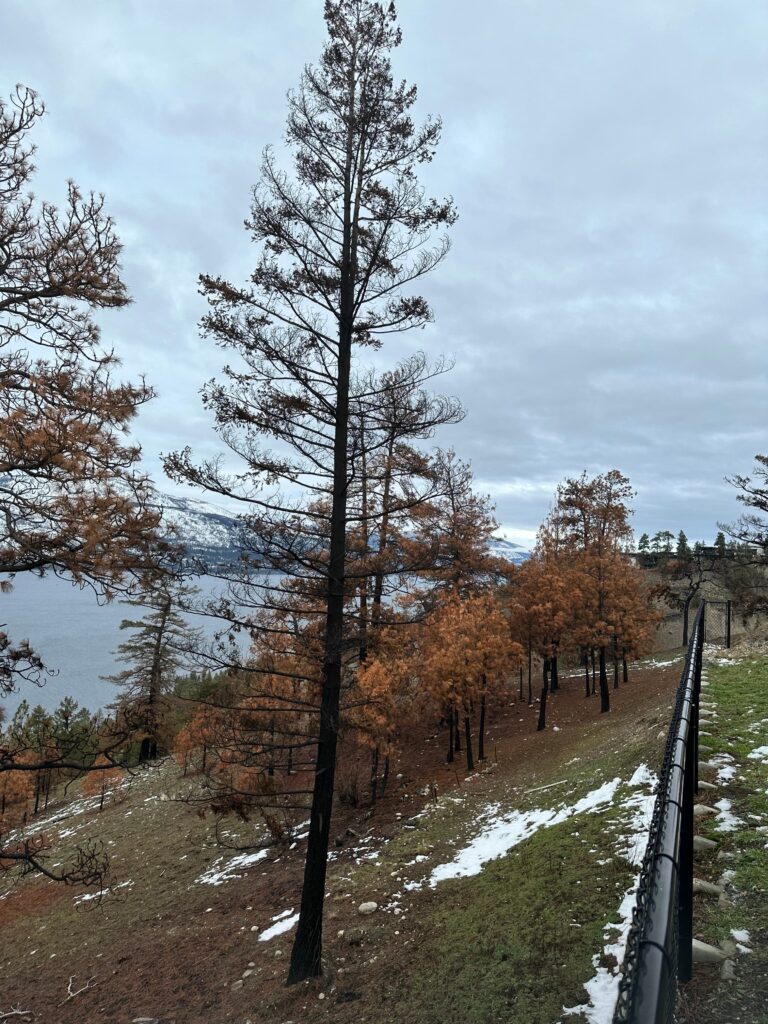
Experienced crews know that visual drama can be misleading. A tree can look catastrophic and remain manageable. Another can look mostly intact while hiding a severe structural problem. Support systems may be considered after emergency stabilization, but not as a reflex. The sequence matters: make the site safe, assess the remaining structure, determine realistic retention options, then prescribe pruning, support, or removal.
The role of ongoing inspection
Trees change. That simple fact drives a great deal of professional caution around structural support. A support plan should never be thought of as a set-it-and-forget-it measure. Growth, weather exposure, and changing site use can all alter the risk picture over time.
A backyard that once saw light foot traffic may later include a play area, seating zone, or parked vehicles under the canopy. A branch that was acceptable over lawn can become more concerning over a new outdoor kitchen or shed. The tree itself may also change in response to pruning, exposure, or age. Continued observation is part of responsible stewardship.
This is another point that experienced arborists emphasize in client conversations. If the property owner wants zero future involvement, cabling and bracing may not align with that expectation. Trees under structural management need periodic review. By contrast, if the owner values preservation and accepts the need for monitoring, support can be a very reasonable investment.
Preservation requires judgment, not hardware alone
The most important thing to understand about Tree Cable and Bracing is that it is not really about hardware. It is about decision-making. The hardware is only the visible part of a larger process that includes assessment, pruning, target awareness, and honest communication about residual risk.
Some trees benefit greatly from structural support. They remain valuable, functional parts of the landscape because an arborist recognized a manageable weakness and addressed it before failure occurred. Other trees are better served by careful removal, followed by Stump Removal & Grinding and, ideally, a smarter replanting plan. Both outcomes can be good arboriculture when they are grounded in evidence and ethics.
That is why the best support recommendations rarely sound dramatic. They sound measured. The arborist explains what they see, what they cannot promise, and what combination of Tree Pruning & Crown Shaping, Tree Cable and Bracing, monitoring, or Tree Removal Services best fits the site. If there has been storm damage, Emergency Tree Services may be the first step. If fire exposure is part of the equation, FireSmart Tree Services may shape the plan. If the risk remains too high, Dangerous Tree Assessment and Removal may be the responsible path.
Healthy tree care is not about saving every tree at all costs. It is about preserving the right trees, reducing avoidable risk, and making decisions that stand up over time. Structural support, used well, is one of the most valuable tools arborists have for doing exactly that.
Name: Ace Tree Services Ltd.
Address: 4656 Wallace Hill Road, Kelowna, BC
Phone: 250-212-9593
Website: https://acetree.ca/
Hours:
Monday: 7:00 AM–5:00 PM
Tuesday: 7:00 AM–5:00 PM
Wednesday: 7:00 AM–5:00 PM
Thursday: 7:00 AM–5:00 PM
Friday: 7:00 AM–5:00 PM
Saturday: 7:00 AM–5:00 PM
Sunday: Closed
Emergency tree services: 24/7 emergency service is listed.
Open-location code / Plus code: RHF8+8G Kelowna, British Columbia, Canada
Map/listing URL: https://www.google.com/maps/place/Ace+Tree+Services+Ltd./@49.8232606,-119.4337283,563m/data=!3m1!1e3!4m6!3m5!1s0x537d8b1d074815c5:0x450b88afa7a41435!8m2!3d49.8232606!4d-119.4337283!16s%2Fg%2F11ydkpnh22
Embed iframe:
Socials: https://www.facebook.com/people/Ace-Tree-Services/61585901931447/
https://m.yelp.com/biz/ace-tree-services-kelowna
Ace Tree Services Ltd. provides professional tree service for residential, commercial, and municipal customers in Kelowna and across the Okanagan Valley.
The company’s listed services include tree removal, stump removal and grinding, tree pruning and crown shaping, emergency tree services, certified arborist consultation, dangerous tree assessment, tree cable and bracing, and wildfire mitigation.
Ace Tree Services works with homeowners, businesses, property managers, and public-sector clients that need safe, practical tree care in the Kelowna area.
The official site highlights ISA-certified arborists, insurance, and experience handling both routine and complex tree service situations.
Customers can contact Ace Tree Services for tree care planning, hazard concerns, emergency tree cleanup, pruning needs, stump grinding, or advice about trees near homes, fences, driveways, and landscaping.
Ace Tree Services lists regular work hours from 7:00 AM to 5:00 PM Monday through Friday, with 24/7 emergency tree service available for urgent situations.
For tree service in Kelowna, call 250-212-9593 or visit https://acetree.ca/
The public map listing places Ace Tree Services Ltd. in Kelowna and can help customers find directions to the Wallace Hill Road area.
Popular Questions About Ace Tree Services Ltd.
What services does Ace Tree Services Ltd. provide?
Ace Tree Services Ltd. provides tree removal, stump removal and grinding, tree pruning and crown shaping, emergency tree services, certified arborist consultation, dangerous tree assessment and removal, tree cable and bracing, and wildfire mitigation.
Where is Ace Tree Services Ltd. located?
The official website lists Ace Tree Services Ltd. at 4656 Wallace Hill Road, Kelowna, BC.
What areas does Ace Tree Services Ltd. serve?
The official website describes Ace Tree Services as located in Kelowna and servicing the Okanagan.
What phone number should customers call?
Customers can call Ace Tree Services Ltd. at 250-212-9593.
What are Ace Tree Services Ltd.’s regular hours?
The official website lists work hours as 7:00 AM to 5:00 PM, Monday through Friday. Saturday and Sunday regular hours are not listed and should be confirmed directly.
Does Ace Tree Services Ltd. offer emergency tree service?
Yes. The official website lists 24/7 emergency services for urgent tree situations, including emergency tree removal, dangerous tree assessment, stabilization, and limb or branch cleanup.
Does Ace Tree Services Ltd. have certified arborists?
Yes. The official website states that Ace Tree Services has ISA-certified arborists.
Can Ace Tree Services Ltd. help with wildfire mitigation?
Yes. Wildfire mitigation is listed as one of the company’s tree services.
How do I contact Ace Tree Services Ltd.?
Call 250-212-9593 or visit https://acetree.ca/.
Landmarks Near Kelowna, BC
Wallace Hill Road: A local Kelowna road near the address listed for Ace Tree Services Ltd.
Okanagan Lake: A major Kelowna landmark near residential, commercial, and waterfront properties that may need tree pruning, removal, or hazard assessment.
Downtown Kelowna: A central area with homes, offices, rental properties, restaurants, and commercial sites that may need professional tree care.
Mission / Lower Mission: A well-known Kelowna area with mature landscaping, residential properties, and lake-adjacent homes.
South East Kelowna: A rural and residential area with larger properties, orchards, and tree-care needs that can include pruning, removals, and wildfire mitigation.
Crawford: A residential area near the southeast side of Kelowna where homeowners may need tree trimming, hazard assessment, and stump grinding.
Kettle Valley: A hillside residential neighborhood where tree condition, slope, wind exposure, and defensible-space planning can matter for property owners.
Myra-Bellevue Provincial Park: A major outdoor landmark near southeast Kelowna and a useful point of orientation for nearby properties.
Gallagher’s Canyon: A residential and golf community near southeast Kelowna where tree maintenance and wildfire-conscious vegetation management can be practical concerns.
Orchard Park Shopping Centre: A major central Kelowna retail landmark and reference point for customers traveling across the city.
Highway 97: A major Kelowna corridor connecting neighborhoods, commercial properties, and service routes throughout the region.
Kelowna City Park: A recognizable central landmark near downtown neighborhoods and lakefront properties.
Glenmore: A Kelowna neighborhood with residential and commercial properties that may need pruning, storm cleanup, and general tree care.
Rutland: A large residential and commercial area where customers may need tree removal, pruning, stump grinding, or arborist consultation.
Black Mountain: A hillside community where slope, wind, wildfire exposure, and access can influence tree service planning.
For tree service near these Kelowna landmarks, contact Ace Tree Services Ltd. at 250-212-9593 or visit https://acetree.ca/