Tree Cable and Bracing to Reduce Limb Failure in Mature Shade Trees
Mature shade trees carry a kind of authority in a landscape. They cool a house by ten or fifteen degrees on a July afternoon, frame a street, soften noise, and make a yard feel settled in a way young plantings never can. They also carry weight, sometimes several tons of it, spread across long limbs that have been extending outward for decades. When one of those limbs fails, the damage is rarely minor. Roofs get punched through. Vehicles are crushed. Walkways and patios become impact zones. People get hurt.
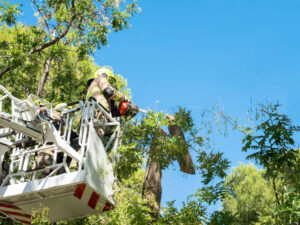
That is where tree cable and bracing enters the conversation. Not as a cure-all, and not as a substitute for good pruning or sound judgment, but as one of the most useful risk-reduction tools we have for preserving valuable mature trees that have structural weaknesses. In the right tree, installed for the right reason, a cable or brace can reduce movement, redistribute stress, and lower the odds of a catastrophic split. In the wrong tree, it can create false confidence and delay a decision that should really be about Dangerous Tree Assessment and Removal.
The difference lies in diagnosis.
Why mature shade trees fail where homeowners least expect it
A surprising number of limb failures happen in trees that looked healthy to the owner a week earlier. The canopy was green. The leaves were full. There was no obvious dead top. That disconnect is common because foliage tells you only part of the story. Structural defects often develop slowly inside unions, scaffold limbs, or trunks, long before the canopy gives any outward warning.
One of the most common trouble spots is a co-dominant stem arrangement, where two leaders of similar size grow from the same point. On paper it looks balanced. In practice, it can be a weak attachment, especially when bark gets trapped between the stems. That included bark prevents proper wood-to-wood connection. As each stem thickens, the pressure increases. Given enough wind, rain loading, or snow, the union can split like a zipper.
Long horizontal limbs present another problem. Shade trees such as oaks, maples, sycamores, and beeches often extend broad lateral branches over driveways, roofs, and play areas. A limb may be perfectly alive and still be overextended. Add a heavy leaf load, a wet spring storm, or end weight from poor past pruning, and the stress at the attachment point climbs sharply.
Decay adds a different layer of risk. Cavities, old pruning wounds, storm damage, and root disturbance can weaken load-bearing wood even when the canopy still looks vigorous. I have seen large maples with lush crowns and serious internal decay around old branch attachments. From the lawn, they looked impressive. From a bucket, with a mallet and probe in hand, they sounded hollow.
This is why a Certified Arborist Consultation matters before anyone recommends hardware. Cabling and bracing works best when the tree still has enough sound wood to hold the system and enough long-term vitality to justify preservation.
What tree cable and bracing actually does
Tree Cable and Bracing refers to supplemental support systems installed in trees to reduce the chance of structural failure. The term gets used loosely, but cables and braces serve slightly different functions.
A cable is usually installed higher in the canopy between stems or major limbs. Its job is to limit excessive movement during wind events and reduce the chance that a weak union will split apart. Static systems use steel cable and hardware. Dynamic systems use synthetic materials designed to allow more movement while still offering support. The choice depends on the defect, the species, the target beneath the tree, and how much movement is acceptable.
Bracing involves threaded steel rods installed through or across weak unions, cracked stems, or split crotches. A brace rod provides direct reinforcement where wood fiber alone is no longer enough. In many cases, a rod handles the separation force low in the union, while a cable higher in the canopy reduces leverage and shock loading.
Done Tree Pruning & Crown Shaping properly, these systems do not “heal” the defect. They do not make a weak union strong in the biological sense. What they do is improve the odds that the tree can withstand normal stress and even some severe weather without immediate failure. That distinction matters, because homeowners sometimes hear “the tree has been cabled” and assume the problem is solved permanently. It is not. It is managed.
The trees that are good candidates, and the ones that are not
A good candidate for support hardware is usually a mature tree with high landscape value, a definable structural weakness, and enough overall health to make retention sensible. Think of a century-old red oak shading a house, a large sugar maple anchoring a front yard, or a historic beech on a property line that would take generations to replace.
What makes these trees good candidates is not just their beauty. It is the combination of significance and recoverability. If the defect is localized, if the crown can be lightened with thoughtful Tree Pruning & Crown Shaping, and if the supporting wood is sound enough to hold hardware, preservation is often worth pursuing.
The poor candidates are just as important to identify. A tree with advanced decay in the trunk base, major root plate instability, or extensive canopy dieback is often beyond what cabling can responsibly address. The same goes for a tree that has already suffered a substantial split with too little sound wood remaining, or one leaning because of root failure. In those cases, Tree Removal Services are not a failure of imagination. They are the correct response to a risk that cannot be engineered away.
This is where homeowners sometimes get mixed messages. One contractor says the tree can be saved with a cable. Another says it should come down. The gap usually comes from the quality of the assessment. A true structural evaluation looks at species tendencies, defect location, load paths, previous pruning cuts, site targets, and decay extent, not just whether the tree is green.
What an arborist looks for before recommending support
Before any drilling, bolting, or cable installation happens, the tree should be inspected closely from the ground and, if needed, in the canopy. The visual signs that matter are often subtle. Bark seams at unions, old cracks that have callused over, bulging wood around included bark, branch attachments with poor taper, and wounds that expose decayed heartwood all tell part of the story.
An experienced arborist also pays attention to load. A weak union over open lawn presents one level of concern. The same union over a nursery, garage, pool deck, or busy sidewalk is a different matter altogether. Risk is always a combination of likelihood and consequence.
The inspection often leads to a layered recommendation, not a single treatment. A limb may need weight reduction through selective pruning, support with a cable, periodic monitoring every one to three years, and clear criteria for removal if conditions worsen. That is more realistic than pretending there is a one-time fix.
Here are a few conditions that commonly justify a closer look at support systems:
- co-dominant stems with included bark
- long overextended scaffold limbs with heavy end weight
- historic storm damage that left a crack or weak union
- trees with multiple leaders over a home, driveway, or high-use area
- valuable mature trees that have sound wood but poor branch architecture
Those are indicators, not automatic approvals. Some co-dominant stems should be cabled. Others should be reduced. Others still should be removed because the attachment has already failed internally.
Cabling works best when paired with pruning
If there is one mistake I see repeatedly, it is treating cabling as a standalone solution. Hardware without load management is often incomplete risk reduction. Trees are dynamic structures. If a weak limb still carries too much end weight, the support system has to absorb forces that should have been reduced biologically through pruning.
Thoughtful Tree Pruning & Crown Shaping complements cabling in two ways. First, it lowers the mechanical stress on defective attachments by shortening lever arms and reducing sail area. Second, it improves canopy structure over time, especially when younger subordinated stems can be guided away from future co-dominance.
The operative word is thoughtful. Over-pruning can backfire. Removing remove dangerous trees too much live foliage, making large heading cuts, or lion-tailing a branch shifts stress in unhelpful ways and can trigger decay or weak regrowth. In mature shade trees, the pruning tied to a support system is typically conservative and selective. The goal is not to make the tree look dramatically smaller. The goal is to reduce load while preserving form, vigor, and shade value.
I once reviewed a large silver maple that had a cable installed between two leaders after a minor storm split. The hardware was solid. The pruning was not. Someone had stripped interior growth and left long tufted branch ends throughout the upper crown. The tree looked neat to the owner, but the structure was worse, not better. The next wind event twisted those long ends hard enough to reopen the seam. That tree ended up in Emergency Tree Services after a summer thunderstorm. Proper load reduction at the start could have changed the outcome.
Static vs dynamic systems, and why the choice matters
Not every support system should be rigid. Static steel cable systems have a long track record and are often the preferred option when movement must be tightly limited, especially above high-value targets or where a union has an existing crack. They can be extremely effective, but they require correct placement, appropriate hardware sizing, and periodic inspection for wear, growth-related issues, and hardware integrity.
Dynamic systems, usually built from synthetic rope materials with shock-absorbing characteristics, allow more natural movement. They are often considered when the objective is support and damping rather than strict restraint, particularly in trees that are still developing reaction wood around a weak union. They can be a good fit in some broadleaf shade trees, but they are not interchangeable with steel in every scenario. A cracked union with active separation may call for a brace rod and steel cable rather than a more forgiving system.
Placement also matters more than many people realize. Install the cable too low and it does little to reduce leverage. Too high, and the anchor points may be undersized or inaccessible. Rods must pass through sound wood at the right location relative to the defect. This is one reason hardware installation is not an ideal place to bargain-shop. Poorly installed systems can wound a tree unnecessarily and still fail to provide meaningful support.
Installation is only the beginning
Once a tree is cabled or braced, the management plan is not finished. Trees continue to grow, move, and respond to stress. Hardware ages. Fasteners can become enveloped by wood. Synthetic systems weather and degrade over time. New defects can emerge elsewhere in the crown.
A support system should be inspected on a schedule that matches the tree’s risk profile, species, age, defect severity, and target exposure. A common interval is every one to three years, with additional checks after severe storms. Inspection is also wise if there has been nearby excavation, grade change, lightning damage, or noticeable canopy decline.
This is where a long-term relationship with a qualified arborist pays off. The original installer may note measurements, hardware type, rod placement, and pruning objectives, then compare conditions over time. That continuity helps identify whether the tree is stabilizing, merely holding, or trending toward eventual removal.
Homeowners should also understand that hardware does not exempt a tree from future decisions. A cabled tree can still become a candidate for Dangerous Tree Assessment and Removal if decay advances, if root problems develop, or if storm damage outpaces the support system. Preservation and realism have to travel together.
Storms, emergencies, and when support is no longer enough
There is a point in some failures where cabling becomes irrelevant because the tree has moved from manageable defect to active emergency. A major split after a windstorm, a partially failed limb hanging over a house, or a trunk crack that opens visibly under load is no longer a wait-and-see situation. That is Emergency Tree Services territory.
After storms, people often ask whether a broken or split tree can be “cabled back together.” Sometimes, especially in younger or smaller trees, limited restoration is possible. In mature shade trees with heavy scaffold limbs, the answer is usually more cautious. Once fibers have torn extensively, the structural equation changes. Even if the limb can be repositioned, the residual strength may be too compromised for a high-target setting.
This is one of the hardest conversations in arboriculture because the trees in question are usually the most loved. They are also the ones nearest the home, precisely because the house and the tree have shared the site for decades. When a mature tree cannot be retained safely, responsible Tree Removal Services protect people first. If the tree is taken down, Stump Removal & Grinding may be part of the restoration plan, especially if replanting, patio repair, drainage correction, or lawn recovery is planned afterward.
Removal is not the opposite of tree care. Sometimes it is the final phase of it.
Species behavior, site pressure, and real-world trade-offs
Not all mature shade trees respond the same way to support systems. Silver maples, for example, often develop broad canopies quickly and can form weak attachments as they age. Bradford pear and similar structurally poor ornamental pears are notorious for splitting, though they are not classic long-lived shade trees. Oaks often have strong wood, but included bark unions can still fail under enough leverage. Beeches and sycamores can retain major limbs for decades, then surprise you when decay at an attachment reaches a tipping point.
Site conditions complicate the picture further. A lawn-irrigated tree with lush, heavy annual growth may carry more sail than the same species in a drier setting. Trees at the edge of a stand experience different wind loading than trees that developed in the open. Root disturbance from trenching, driveway expansion, or utility work can turn a canopy issue into a whole-tree stability issue.
Then there is target occupancy. A weak limb over a woodland edge may be monitored for years. The same limb over a child’s playset, parked cars, or a busy entrance demands a lower tolerance for uncertainty. This is why recommendations that sound inconsistent between properties are often perfectly justified. The defect is only one part of the risk story.
Where wildfire considerations overlap with structural support
At first glance, Tree Cable and Bracing and Wildfire Mitigation Tree Services may seem unrelated. In practice, they overlap more than many homeowners expect, especially in the wildland-urban interface. A mature shade tree near a structure may have both structural defects and fire-related concerns. A dense lower canopy, deadwood accumulation, overextended limbs near the roofline, and ladder fuels beneath the crown all matter.
Support hardware is not a wildfire treatment, but the pruning work associated with it can be coordinated with defensible-space goals. That might mean reducing overhang above the roof, removing deadwood, increasing vertical clearance, and preserving a valuable mature tree that still contributes shade and moisture moderation around the home. On the other hand, if the tree is structurally compromised and poorly placed from a fire standpoint, retention may make less sense. Fire behavior, falling-limb risk, and access for emergency response all need consideration.
This is another case where a piecemeal approach causes trouble. Homeowners call one company for pruning, another for storm risk, and a third after a failure. A broader site-level assessment often produces better decisions and fewer surprises.
Questions worth asking before approving the work
A homeowner does not need to become an arborist, but a few practical questions can sharpen the conversation and reveal whether the recommendation is thoughtful or generic.
- what defect is being addressed, specifically
- is pruning part of the plan, and if not, why not
- what type of system is proposed, and why that type
- how often should the hardware be inspected
- under what conditions would removal become the safer option
Those questions often prompt a more useful explanation than “the tree needs a cable.” A credible answer should describe the weakness, the load path, the expected benefit, and the limits of the treatment.
Preserving the right trees for the right reasons
The best outcomes in mature tree care usually come from restraint, not from trying to force every tree into the save-at-all-costs category. Some trees deserve investment because they are sound enough, significant enough, and well-situated enough to justify careful structural support. Others are asking too much of hardware, too close to valuable targets, or too far along in decline.
When Tree Cable and Bracing is used well, it extends the service life of important shade trees and lowers the chance of sudden limb failure. It buys time, protects property, and preserves canopy that would take decades to replace. When it is used poorly, it masks risk and delays difficult decisions.
That is why the sequence matters. Start with a skilled inspection. Pair support with proper pruning. Reassess over time. Be honest about targets, decay, and storm exposure. And if the diagnosis points toward Dangerous Tree Assessment and Removal, respect that judgment before the tree makes the decision for you.
A mature shade tree is one of the most valuable living assets on a property. It deserves more than guesswork, and more than a one-size-fits-all prescription. Sometimes the right answer is a cable high in the crown and a rod through a weak union. Sometimes it is selective reduction and annual monitoring. Sometimes it is Emergency Tree Services after a failure, followed by Tree Removal Services and Stump Removal & Grinding so the site can be made safe and replanted well.
Good arboriculture is not about preserving every tree. It is about preserving the right tree, in the right way, for as long as that remains responsible.
Name: Ace Tree Services Ltd.
Address: 4656 Wallace Hill Rd, Kelowna, BC V1W 4C2, Canada
Phone: 250-212-9593
Website: https://acetree.ca/
Email: [email protected]
Hours:
Sunday: Closed
Monday: 7:00 AM–5:00 PM
Tuesday: 7:00 AM–5:00 PM
Wednesday: 7:00 AM–5:00 PM
Thursday: 7:00 AM–5:00 PM
Friday: 7:00 AM–5:00 PM
Saturday: 7:00 AM–5:00 PM
Time zone: Pacific Time
Open-location code / Plus code: RHF8+8G Kelowna, British Columbia, Canada
Map/listing URL: https://www.google.com/maps/search/?api=1&query=Google&query_place_id=ChIJxRVIBx2LfVMRNRSkp6-IC0U
Embed iframe:
Socials:
https://www.facebook.com/p/Ace-Tree-Services-61585901931447/
Ace Tree Services Ltd. provides professional tree care from its Kelowna location on Wallace Hill Road.
The official website lists tree removal, stump removal and grinding, tree pruning and crown shaping, emergency tree services, certified arborist consultation, dangerous tree assessment and removal, tree cabling and bracing, and wildfire mitigation.
Ace Tree Services serves homeowners, businesses, and property owners in Kelowna and throughout the Okanagan Valley.
The company’s official site highlights ISA Certified Arborist support, local Okanagan experience, and fully insured tree service work.
Customers can contact Ace Tree Services for planned tree maintenance, high-risk removals, storm-related tree concerns, pruning, stump grinding, and arborist consultation needs.
The supplied public listing address is 4656 Wallace Hill Rd, Kelowna, BC V1W 4C2, near rural and residential service areas in southeast Kelowna.
For tree services in Kelowna and the Okanagan, call 250-212-9593, email [email protected], or visit https://acetree.ca/
The public map listing uses plus code RHF8+8G Kelowna, British Columbia, Canada and can help customers find Ace Tree Services Ltd. near Wallace Hill Road.
Popular Questions About Ace Tree Services Ltd.
What does Ace Tree Services Ltd. do?
Ace Tree Services Ltd. provides tree removal, stump removal and grinding, tree pruning and crown shaping, emergency tree service, certified arborist consultation, dangerous tree assessment and removal, tree cabling and bracing, and wildfire mitigation.
Where is Ace Tree Services Ltd. located?
Ace Tree Services Ltd. is listed at 4656 Wallace Hill Rd, Kelowna, BC V1W 4C2, Canada.
What phone number should customers call?
Customers can call Ace Tree Services Ltd. at 250-212-9593.
What is the email address for Ace Tree Services Ltd.?
The supplied email address is [email protected].
What are Ace Tree Services Ltd.’s hours?
The supplied listing hours show Monday through Saturday from 7:00 AM to 5:00 PM, with Sunday closed, Pacific Time. The official website lists 7:00 AM to 5:00 PM, Monday through Friday, so customers should confirm Saturday availability before booking.
Does Ace Tree Services Ltd. provide emergency tree service?
Yes. The official website lists emergency tree services, including emergency tree removal, dangerous tree assessment, emergency stabilization, and limb or branch cleanup.
Does Ace Tree Services Ltd. offer arborist consultations?
Yes. The official services page lists certified arborist consultation as one of the company’s Okanagan tree services.
Does Ace Tree Services Ltd. provide stump grinding?
Yes. The official services page lists stump removal and grinding as a service.
What areas does Ace Tree Services Ltd. serve?
The official website states that Ace Tree Services serves Kelowna and the Okanagan Valley.
How do I contact Ace Tree Services Ltd.?
Call 250-212-9593, email [email protected], visit https://acetree.ca/, or use the listed social profile: Facebook.
Landmarks Near Kelowna, BC
Wallace Hill Road: The road listed for Ace Tree Services Ltd. and a practical reference point for the company’s Kelowna location.
East Kelowna: A nearby rural and residential area where tree maintenance, pruning, removals, and wildfire mitigation can be important for property owners.
Myra-Bellevue Provincial Park: A major outdoor landmark southeast of Kelowna and a useful reference for the surrounding hillside and forested areas.
Gallagher’s Canyon: A nearby Kelowna community with residential properties, mature trees, and landscape maintenance needs.
Kettle Valley: A southeast Kelowna neighborhood with homes, parks, and landscaped properties.
Mission Creek Greenway: A well-known natural corridor in Kelowna and a local reference point for tree-lined recreation areas.
Orchard Park Shopping Centre: A major Kelowna retail landmark and citywide reference point.
Downtown Kelowna: A central business and residential district within Ace Tree Services’ broader Kelowna service area.
Okanagan Lake: A major regional landmark running through Kelowna and the surrounding Okanagan Valley.
Mission Creek Regional Park: A recognizable Kelowna park and natural landmark with extensive trees and trails.
Rutland: A large Kelowna community with residential and commercial properties that may need tree service support.
Glenmore: A Kelowna neighborhood with homes, parks, and established trees.
Lower Mission: A residential and lake-adjacent Kelowna area where pruning, tree health, and property safety can matter for homeowners.
Kelowna International Airport: A major transportation landmark north of central Kelowna.
West Kelowna: A nearby Okanagan community across the lake and a practical regional service reference.
For tree removal, stump grinding, pruning, crown shaping, emergency tree service, arborist consultation, dangerous tree assessment, cabling and bracing, or wildfire mitigation near these Kelowna and Okanagan landmarks, contact Ace Tree Services Ltd. at 250-212-9593, email [email protected], or visit https://acetree.ca/