Tree Pruning & Crown Shaping Without Topping or Stub Cuts
Good pruning is quiet work. When it is done well, most people do not notice the cuts. They notice the tree instead. The canopy looks balanced. Limbs clear the roofline and the driveway without looking stripped. Light moves through the crown, but the tree still reads as itself. That result takes restraint, planning, and a clear understanding of what not to do.
Two of the most damaging habits in tree care are topping and stub cuts. They are still common enough that many property owners have seen them, and some have even been told they are standard practice. They are not. Industry guidance used in arboriculture specifically warns against improper techniques such as topping and stub cuts, while supporting proper branch removal, reduction cuts, crown raising, and directional pruning. That distinction matters because pruning is not just about making a tree smaller. It is about managing structure, clearance, and risk while preserving as much sound form as possible.
Tree Pruning & Crown Shaping, done properly, sits in the middle of art and risk management. It asks a simple question over and over: what is the smallest intervention that solves the problem?
What topping really does to a tree
Homeowners usually ask for topping for understandable reasons. A tree feels too tall near the house. Limbs are reaching over a roof. Wind has people uneasy after a storm season. Sometimes the request comes after a neighbor had work done and the result looked “tidy” from the street. The trouble is that topping solves the visual concern by creating a biological and structural problem.
Topping removes large portions of the crown in a blunt, indiscriminate way. It does not follow the natural branching pattern or use proper reduction cuts back to appropriate lateral branches. The tree may look smaller the day the truck leaves, but the shape is broken and the response is often unruly. A topped tree rarely stays quiet. It tends to react, and that reaction can create a cycle of more aggressive cutting later.
That is one reason experienced crews prefer crown reduction and crown shaping when reduction is actually needed. The work is more selective. The tree keeps a more natural outline. The objective is not to flatten a crown into a hedge-like form. It is to guide the canopy, reduce selected end weight, improve clearance, and preserve a coherent branch structure.
There is also a practical side that property owners notice quickly. A topped tree often looks harsh for years. A properly reduced crown usually settles back into the landscape with far less visual shock.
Why stub cuts are not a small mistake
Stub cuts are easy to describe and easy to underestimate. They happen when a branch is cut and a noticeable stub is left instead of making a proper cut at the correct point for branch removal or reduction. To many people, it seems harmless. The branch is shorter, after all. But in pruning, where a cut is made is the whole job.
A stub is evidence that the cut did not respect the branch structure. It leaves behind tissue that was not part of a proper finishing cut. In the field, stub cuts often show up after rushed work, poor tool access, or a misunderstanding of how to reduce a branch without simply lopping it off. They are common on trees that have been “cleaned up” quickly before a property sale or after storm damage, when the pressure to make things look finished outruns judgment.
If crown shaping is supposed to create a durable result, stub cuts pull in the opposite direction. They do not shape. They interrupt. You can walk a block and spot them from a distance, especially when they are repeated throughout the canopy. The tree looks clipped rather than managed.
Crown shaping is not cosmetic trimming
This is where a lot of confusion starts. People hear “crown shaping” and imagine purely decorative work. In practice, it is a structured pruning approach used to manage the visible form of the canopy while addressing functional needs. That can include balancing the crown, improving clearance over a walkway, guiding branch growth away from a structure, or reducing selected overextended tips without stripping the tree.
The best crown shaping jobs are not dramatic. They look obvious only if you compare before and after photos. Standing under the tree afterward, the result should feel natural. Light may pass through more evenly. The scaffold branches may read more clearly. The tree may sit better in relation to the house or street. Yet nothing should look carved into submission.
In real-world residential work, there is almost always a trade-off. A client may want more sky opened up over a patio, while the tree needs enough canopy retained to keep its form. Another may want every branch kept far from the roof, even though the species and site mean a certain amount of ongoing directional pruning will always be part of maintenance. Good judgment comes from explaining those limits clearly. Tree care is not a one-time act of control. It is management over time.
The cuts that respect structure
Proper pruning is built on selection. Instead of making a series of arbitrary heading cuts, the arborist chooses branches based on structure, spacing, and the stated objective. If clearance is needed, crown raising may be the right tool. If the end of a limb has grown too far, a reduction cut back to a suitable lateral may solve it. If growth is biased toward one side, directional pruning can gradually influence the canopy.
Those distinctions are not academic. They are what separate thoughtful pruning from damage disguised as maintenance.
This is also where a Certified Arborist Consultation earns its value. ISA Certified Arborists are trained in the art and science of tree care, must pass a comprehensive exam, continue their education, and follow a code of ethics. That background matters because pruning choices are often irreversible. Once large limbs are removed, you do not get to test a different strategy next week. The tree lives with the cut.
A consultation is especially useful when a property owner is deciding between pruning and removal. Not every large tree near a home requires Tree Removal Services. Some situations can be improved with pruning or with structural support systems such as Tree Cable and Bracing. Others may fall into Dangerous Tree Assessment and Removal because the level of risk is too high or the defects too significant. The point is not to save every tree at any cost, and it is not to remove trees for convenience when a less invasive treatment could achieve an acceptable result.
Risk, fear, and the impulse to over-prune
Storms change how people see trees. After a branch failure in the neighborhood, or after a windy night that drops debris across a yard, the phone starts ringing. Some of those calls are routine maintenance requests. Some are true Emergency Tree Services situations. The challenge is that fear often pushes people toward severe pruning, even when the tree does not need it.
Risk assessment in arboriculture is a systematic process used to identify, analyze, and evaluate risk, then recommend measures to achieve an acceptable level of risk. That wording matters because there is no completely safe tree. Some level of risk exists with any tree, just as some level of risk exists with roofs, stairs, and roads. The job is not to promise absolute safety. It is to understand the condition, the target, and the reasonable options.
Sometimes pruning is enough. Sometimes a support system can reduce movement in a weak union. Sometimes the recommendation is removal. That is why Dangerous Tree Assessment and Removal should never be based only on height, species stereotypes, or a single dramatic-looking limb. The location of the defect, the likely target, and the feasibility of treatment all shape the decision.
In practice, this means not every “dangerous-looking” tree is dangerous in the same way, and not every nervous client needs the same answer. A tree leaning away from targets in an open area presents a different management problem than a compromised tree over a bedroom roof. Broad categories are not enough.
When emergency work changes the rules
Emergency response is one of the few contexts where the perfect pruning plan may not be possible on the first visit. After storm damage, the immediate objective can be access, hazard reduction, and stabilization. A split limb over a driveway or a partially failed top hung in the canopy may need urgent attention before any fine shaping can happen. Emergency Tree Services exist for that reason.
Even then, proper technique still matters. Trained crews use controlled methods for handling and lowering limbs because pruning and removal, especially on large trees, is dangerous work that should be done only by people trained and equipped to work safely in trees. The public sometimes sees a storm-damaged tree and assumes any cut that gets wood to the ground is acceptable. It is not. The urgency changes the pace, not the need for skill.
One pattern I have seen repeatedly is the “temporary cut” that becomes permanent. A damaged branch is shortened quickly during an emergency call, then no one comes back to finish the pruning correctly. Months later the crown is dotted with stubs and broken lines. If a tree has been through emergency work, it is worth scheduling a follow-up review. Cleanup pruning and structural reassessment often make the difference between a tree that recovers into a workable form and one that enters a cycle of repeated correction.
Crown shaping near homes and managed landscapes
Residential pruning usually starts with conflicts. The tree is touching a roof, shading a solar installation, brushing delivery trucks, crowding a façade, or narrowing a sightline. Commercial properties add their own pressures, especially over parking areas and pedestrian routes. The mistake is to treat all of those conflicts with the same recipe.
A crown overhanging a roof, for example, may need selective reduction and directional pruning rather than broad thinning or wholesale shortening. A low limb over a walk may call for modest crown raising if that can be done without distorting the tree. A heavily one-sided tree may need phased work over more than one season so the canopy is not forced into a harsher correction than necessary.
This is where practical experience counts. On paper, every client says they want the tree to look natural. In the yard, some are happy with measured, strategic cuts, while others are tempted to keep asking for “just a little more” until the tree is nearly over-pruned. The professional’s job is to hold the line when the request crosses from maintenance into damage. That is not always a popular conversation, but it is part of honest tree care.
The link between pruning and removal decisions
People often think of pruning and removal as separate services, but in practice they inform each other. Good pruning can delay or avoid a removal in some cases by reducing conflict and managing structure. Poor pruning can push a tree toward decline, instability, or unacceptable form, making Tree Removal Services more likely later.
The same is true after removal. If a tree must come down because risk cannot be reduced to an acceptable level, the work is not really finished until the site is dealt with properly. That may include Stump Removal & Grinding if the remaining stump would interfere with replanting, mowing, access, or future site use. Property owners sometimes postpone stump work because it feels secondary, but on many sites the stump becomes the daily reminder that the project was only half completed.
The larger lesson is that tree care works best when it is planned as a sequence rather than a series of isolated reactions. Assessment, pruning, support, emergency response, removal, and stump work are connected choices.
When support systems make sense
Not every structural problem in a tree is solved with a saw. In selected cases, Tree Cable and Bracing can be part of a broader management plan. Support systems are mentioned within arboricultural treatment options because they may reduce risk where branch structure or unions need reinforcement and where retention is still reasonable.
That said, support systems are not decoration and not a shortcut around necessary pruning. If a branch is poorly managed and excessively long, hardware alone is not a substitute for reducing leverage. Likewise, if a tree’s condition has moved beyond acceptable risk, cable and bracing should not be used to justify keeping it by default. These treatments require judgment, installation skill, and follow-up evaluation. They are tools, not talismans.
A good arborist will explain the limits. Sometimes the right answer is a combination of selective pruning and support. Sometimes it is monitoring. Sometimes it is removal. The strength of the recommendation comes from matching the treatment to the actual condition, not from forcing every tree into the same preservation narrative.
Fire-prone properties need a different lens
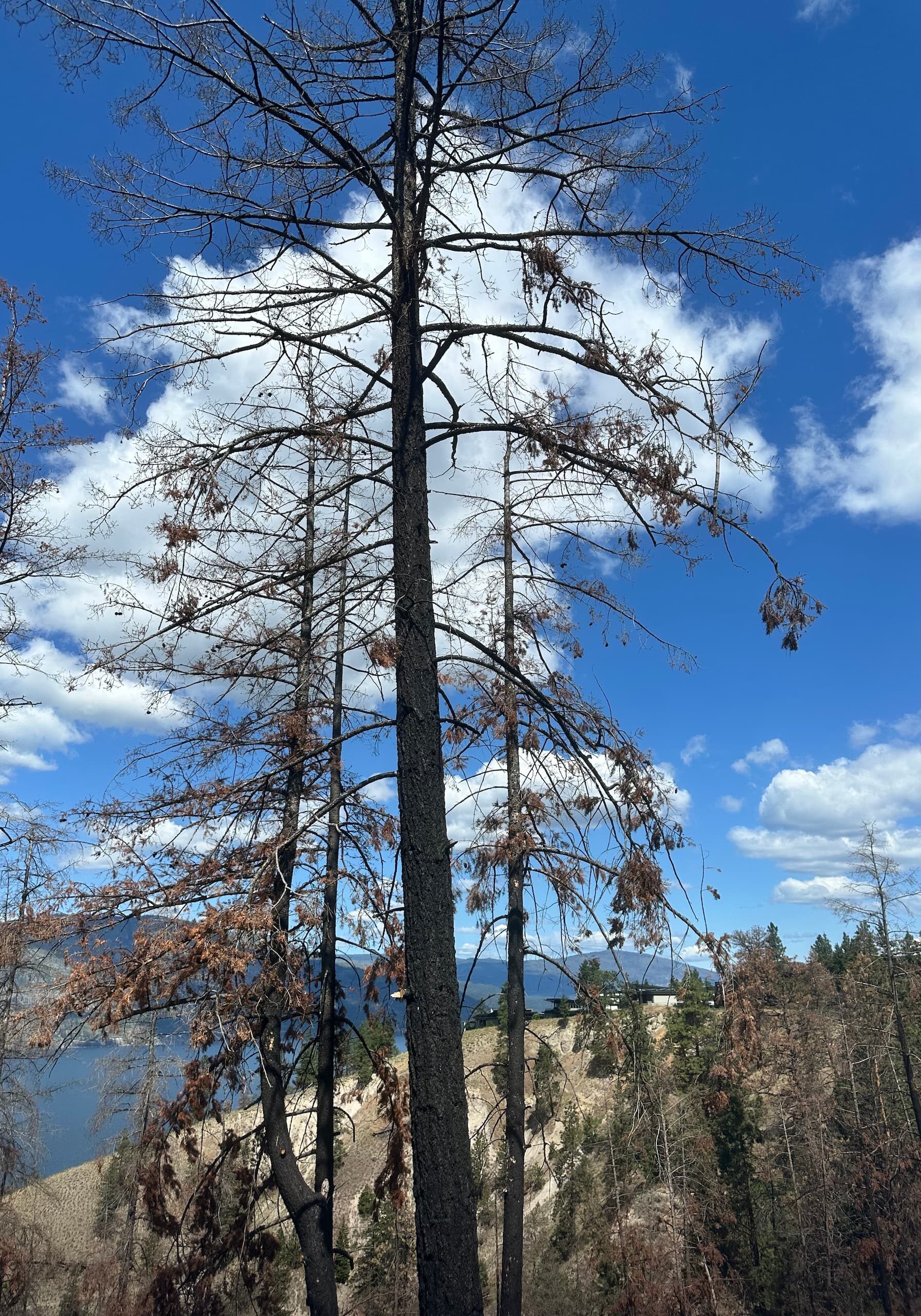
In fire-prone areas, pruning decisions can take on another layer of complexity. FireSmart Tree Services are not simply about making a landscape sparse or scalping every branch up the trunk. They require balancing vegetation management with tree health, site use, and broader property objectives.
That usually means the arborist must think beyond one tree. How close is the canopy to structures? Are lower limbs creating a pathway of continuous vegetation near the building? Can pruning improve separation and clearance without disfiguring the tree? The answer is rarely found in topping. In fact, blunt size reduction often creates fresh maintenance problems without delivering the nuanced spacing and structure that fire-conscious properties need.
This is another place where crown shaping earns its keep. Selective work can improve unsafe tree assessment the relationship between trees, structures, and surrounding vegetation while keeping the trees functional in the landscape. The exact prescription will vary by site, but the principle remains steady: strategic cuts outperform indiscriminate ones.
A few signs the work should stop and a real assessment should begin
There are moments when a pruning request stops being a routine maintenance job and becomes a risk-management conversation. Property owners are usually better served by pausing and asking for a qualified assessment when they notice conditions like these:
- A major limb has failed recently, especially over a target such as a roof, driveway, or commonly used area.
- The proposed scope includes cutting back large sections of the crown simply to make the tree “safe.”
- Previous work left obvious stubs, harsh heading cuts, or a visibly topped canopy.
- The tree may need more than pruning, such as support systems or a removal decision.
- The work is being suggested on a large tree by someone who is not trained and equipped for safe tree work.
That is the point where a Certified Arborist Consultation becomes more than a nice extra. It becomes the foundation for deciding what is reasonable.
What a careful pruning conversation sounds like
When the process is working, the conversation with the client is specific. Which branches are in conflict? What clearance is Tree Pruning & Crown Shaping actually needed? Is this a one-time shaping visit, or the start of cyclical maintenance? Is the priority aesthetics, access, risk reduction, or all three in a ranked order? If a client says, “I just want it cut back,” the professional’s job is to translate that into objective-based pruning.
I have found that clients respond well when they are shown restraint as a form of expertise rather than reluctance. Anyone can remove more wood. The harder skill is knowing what to leave. A mature tree can take decades to become a meaningful part of a property and a few hours to be misshaped. Once people understand that topping and stub cuts are not aggressive versions of proper pruning but different categories of work altogether, they usually stop asking for them.
There is also value in setting expectations about maintenance intervals. Crown shaping is not a magic reset button. Trees continue to grow, and the site continues to impose constraints. A tree near a structure may need periodic directional pruning to maintain the relationship you create today. That is normal. Good maintenance tends to be lighter and more predictable than long-delayed corrective work.
The standard worth insisting on
The easiest tree work to sell is often the harshest. Severe cuts look dramatic from the curb and promise quick relief from worry. Proper pruning is more disciplined. It respects branch structure, uses appropriate removal and reduction cuts, and avoids the shortcuts that create longer problems.
That standard is worth insisting on, whether the immediate need is Tree Pruning & Crown Shaping, a storm response, a risk review, Tree Cable and Bracing, FireSmart Tree Services, or a hard decision involving Tree Removal Services and Stump Removal & Grinding. Each of those services can be legitimate. What matters is that the treatment fit the tree and the site.
A tree does not need to be untouched to be cared for well. It needs informed cuts, limited cuts, and cuts made for a reason. When crown shaping is done without topping or stub cuts, the result is usually the same thing every skilled arborist aims for: a tree that looks right, functions better, and keeps as much of its integrity as the site will allow.
Name: Ace Tree Services Ltd.
Address: 4656 Wallace Hill Road, Kelowna, BC
Phone: 250-212-9593
Website: https://acetree.ca/
Hours:
Monday: 7:00 AM–5:00 PM
Tuesday: 7:00 AM–5:00 PM
Wednesday: 7:00 AM–5:00 PM
Thursday: 7:00 AM–5:00 PM
Friday: 7:00 AM–5:00 PM
Saturday: 7:00 AM–5:00 PM
Sunday: Closed
Emergency tree services: 24/7 emergency service is listed.
Open-location code / Plus code: RHF8+8G Kelowna, British Columbia, Canada
Map/listing URL: https://www.google.com/maps/place/Ace+Tree+Services+Ltd./@49.8232606,-119.4337283,563m/data=!3m1!1e3!4m6!3m5!1s0x537d8b1d074815c5:0x450b88afa7a41435!8m2!3d49.8232606!4d-119.4337283!16s%2Fg%2F11ydkpnh22
Embed iframe:
Socials: https://www.facebook.com/people/Ace-Tree-Services/61585901931447/
https://m.yelp.com/biz/ace-tree-services-kelowna
Ace Tree Services Ltd. provides professional tree service for residential, commercial, and municipal customers in Kelowna and across the Okanagan Valley.
The company’s listed services include tree removal, stump removal and grinding, tree pruning and crown shaping, emergency tree services, certified arborist consultation, dangerous tree assessment, tree cable and bracing, and wildfire mitigation.
Ace Tree Services works with homeowners, businesses, property managers, and public-sector clients that need safe, practical tree care in the Kelowna area.
The official site highlights ISA-certified arborists, insurance, and experience handling both routine and complex tree service situations.
Customers can contact Ace Tree Services for tree care planning, hazard concerns, emergency tree cleanup, pruning needs, stump grinding, or advice about trees near homes, fences, driveways, and landscaping.
Ace Tree Services lists regular work hours from 7:00 AM to 5:00 PM Monday through Friday, with 24/7 emergency tree service available for urgent situations.
For tree service in Kelowna, call 250-212-9593 or visit https://acetree.ca/
The public map listing places Ace Tree Services Ltd. in Kelowna and can help customers find directions to the Wallace Hill Road area.
Popular Questions About Ace Tree Services Ltd.
What services does Ace Tree Services Ltd. provide?
Ace Tree Services Ltd. provides tree removal, stump removal and grinding, tree pruning and crown shaping, emergency tree services, certified arborist consultation, dangerous tree assessment and removal, tree cable and bracing, and wildfire mitigation.
Where is Ace Tree Services Ltd. located?
The official website lists Ace Tree Services Ltd. at 4656 Wallace Hill Road, Kelowna, BC.
What areas does Ace Tree Services Ltd. serve?
The official website describes Ace Tree Services as located in Kelowna and servicing the Okanagan.
What phone number should customers call?
Customers can call Ace Tree Services Ltd. at 250-212-9593.
What are Ace Tree Services Ltd.’s regular hours?
The official website lists work hours as 7:00 AM to 5:00 PM, Monday through Friday. Saturday and Sunday regular hours are not listed and should be confirmed directly.
Does Ace Tree Services Ltd. offer emergency tree service?
Yes. The official website lists 24/7 emergency services for urgent tree situations, including emergency tree removal, dangerous tree assessment, stabilization, and limb or branch cleanup.
Does Ace Tree Services Ltd. have certified arborists?
Yes. The official website states that Ace Tree Services has ISA-certified arborists.
Can Ace Tree Services Ltd. help with wildfire mitigation?
Yes. Wildfire mitigation is listed as one of the company’s tree services.
How do I contact Ace Tree Services Ltd.?
Call 250-212-9593 or visit https://acetree.ca/.
Landmarks Near Kelowna, BC
Wallace Hill Road: A local Kelowna road near the address listed for Ace Tree Services Ltd.
Okanagan Lake: A major Kelowna landmark near residential, commercial, and waterfront properties that may need tree pruning, removal, or hazard assessment.
Downtown Kelowna: A central area with homes, offices, rental properties, restaurants, and commercial sites that may need professional tree care.
Mission / Lower Mission: A well-known Kelowna area with mature landscaping, residential properties, and lake-adjacent homes.
South East Kelowna: A rural and residential area with larger properties, orchards, and tree-care needs that can include pruning, removals, and wildfire mitigation.
Crawford: A residential area near the southeast side of Kelowna where homeowners may need tree trimming, hazard assessment, and stump grinding.
Kettle Valley: A hillside residential neighborhood where tree condition, slope, wind exposure, and defensible-space planning can matter for property owners.
Myra-Bellevue Provincial Park: A major outdoor landmark near southeast Kelowna and a useful point of orientation for nearby properties.
Gallagher’s Canyon: A residential and golf community near southeast Kelowna where tree maintenance and wildfire-conscious vegetation management can be practical concerns.
Orchard Park Shopping Centre: A major central Kelowna retail landmark and reference point for customers traveling across the city.
Highway 97: A major Kelowna corridor connecting neighborhoods, commercial properties, and service routes throughout the region.
Kelowna City Park: A recognizable central landmark near downtown neighborhoods and lakefront properties.
Glenmore: A Kelowna neighborhood with residential and commercial properties that may need pruning, storm cleanup, and general tree care.
Rutland: A large residential and commercial area where customers may need tree removal, pruning, stump grinding, or arborist consultation.
Black Mountain: A hillside community where slope, wind, wildfire exposure, and access can influence tree service planning.
For tree service near these Kelowna landmarks, contact Ace Tree Services Ltd. at 250-212-9593 or visit https://acetree.ca/