What ISA-Credentialed Professionals Bring to Tree Care
Tree care looks straightforward from the street. A crew arrives with saws, ropes, and a chip truck, then leaves with a cleaner canopy or an empty patch of lawn where a tree used to stand. What the public usually does not see is the judgment behind every cut, every rigging point, and every recommendation to leave a tree alone.
That judgment is where ISA-credentialed professionals stand apart.
An ISA credential does not make someone infallible, and it does not eliminate the inherent risk of arboriculture. Tree work is dangerous by nature, especially when large trees, storm damage, or compromised structures are involved. Even so, credentialing matters because it points to a specific level of training in the art and science of tree care, successful completion of a comprehensive exam, a commitment to continuing education, and adherence to a professional code of ethics. Those are not abstract benefits. They affect the quality of pruning, the logic behind removals, the handling of emergency calls, and the advice a property owner receives when the right answer is not obvious.
For homeowners, property managers, and facility teams, that difference often shows up in practical ways. One arborist sees a declining tree and prescribes immediate removal. Another studies the site, the defects, the target area, and the options for mitigation, then explains that a reduction prune, a support system, or periodic monitoring may reduce risk without unnecessary intervention. A credentialed professional is trained to think in that more disciplined way.
The credential signals more than a test score
People sometimes reduce professional credentials to a line on a business card. In tree care, that misses the point. ISA certification is meaningful because it reflects structured knowledge and ongoing accountability in a field where poor decisions can damage trees, property, and people.
The work itself spans biology, mechanics, safety awareness, and field judgment. A healthy mature tree can still fail. A tree with visible defects can sometimes be managed rather than removed. A pruning cut can improve structure or create future decay, depending on where and how it is made. Those are not decisions that should rest on guesswork or habit.
When an ISA-credentialed professional steps onto a site, they are bringing training that connects tree biology with practical operations. That matters whether the conversation is about Tree Pruning & Crown Shaping in a front yard maple, a large commercial Tree Removal Services project, or a fast-moving Emergency Tree Services call after wind damage.
A useful way to think about the credential is this:
- It indicates formal knowledge tested through a comprehensive exam.
- It requires continuing education to remain current.
- It ties the professional to a Code of Ethics.
- It supports better judgment in pruning, removal, and risk evaluation.
- It gives clients a stronger basis for trusting recommendations.
None of that guarantees that every job will be simple. Tree care rarely is. What it does mean is that the person advising you should be better equipped to make defensible decisions under real conditions.
Tree care is rarely just about cutting wood
A common mistake in this industry is to treat all tree work as a production task. Limbs come off, sections come down, brush gets chipped, stump gets ground. The physical work matters, of course, but the visible operation is only half the job. The other half is diagnosis and planning.
Take a large codominant tree over a driveway. To one crew, it is a removal candidate. To an ISA-credentialed arborist, it is first a structural question. What are the unions like? Is there included bark? Has there been previous storm failure? What targets are present beneath the crown? Can Tree Cable and Bracing reduce the likelihood of failure, or has the condition moved too far for support systems to make sense? Is selective pruning enough to lessen end weight and improve loading, or would that be too little, too late?
That way of thinking saves good trees when preservation is reasonable, and it supports removal when removal is truly warranted. The distinction is important because there is no such thing as a completely safe tree. Some level of risk always exists. The goal is not to pretend otherwise. The goal is to identify, analyze, and evaluate that risk in a systematic way, then recommend measures that bring it to an acceptable level.
That is a more mature standard than simply saying a tree is “fine” or “dangerous.”
What better pruning actually looks like
Pruning is where professional training becomes obvious very quickly. Poor pruning can disfigure a tree for decades. Good pruning can improve structure, clearance, and longevity without forcing the tree into unnecessary stress.
ISA guidance around pruning recognizes distinctions that many clients never hear explained clearly. Crown reduction is not the same as indiscriminate cutting back. Crown raising is not the same as stripping out lower limbs with no regard for balance. Directional pruning has a purpose. Proper branch removal and reduction cuts matter. So does avoiding practices such as topping or leaving stubs.
In the field, that translates into decisions that respect both function and form. A credentialed arborist handling Tree Pruning & Crown Shaping should be able to explain why a branch is being reduced rather than removed, why one scaffold limb is left intact while another is shortened, or why a requested “hard cutback” would create long-term problems. Those conversations can be uncomfortable, especially when a client wants immediate visual change. Still, they are part of responsible practice.
I have seen trees recover well from thoughtful structural pruning after storm exposure, and I have seen healthy trees decline after aggressive, poorly placed cuts made in the name of neatness. The difference was not usually effort. It was understanding. A trained arborist works from the tree outward, not from the customer’s first impulse inward.
That is one of the real values of Certified Arborist Consultation. It gives owners a chance to hear not only what can be done, but what should not be done.
Risk assessment requires discipline, not hunches
There are few phrases in tree care that can cause more confusion than “hazard tree.” Clients often want certainty. They want someone to stand under a tree, look up for thirty seconds, and declare it safe or unsafe. Real risk assessment does not work that way.
ISA guidance frames tree risk assessment as a systematic process. The work involves identifying conditions, analyzing how those conditions relate to potential failure, evaluating the severity of likely consequences, and then recommending options to manage the situation. That process matters because trees exist in context. A defect over an unused wooded edge is not the same as the same defect over a play area, driveway, or building entrance.
Dangerous Tree Assessment and Removal should therefore begin with the assessment part, not the removal part. A credentialed arborist is more Click for info likely to explain both the defect and the target. They should also be prepared to discuss alternatives. Sometimes the answer is removal. Sometimes it is canopy reduction, access restriction, support hardware, or planned reinspection.
This is where experience and restraint intersect. Overstating danger can lead to unnecessary removals. Understating danger can lead to catastrophic failure. A credentialed professional is trained to operate between those extremes.
That balance is especially important after storms, when fear tends to outrun observation. A split leader, torn branch attachment, uplifted root plate, or hung-up limb may indeed require immediate action. Just as often, the tree needs calm evaluation before anyone commits to a course of work.
Emergency response is not just speed, it is controlled decision-making
Emergency Tree Services create the most demanding conditions in arboriculture. The calls come in quickly, the pressure is high, and the scene may involve storm-loaded limbs, utility conflicts, blocked access, or partially failed trees under tension. In those moments, the public often sees only one question: how fast can someone get here?
Speed matters, but uncontrolled speed can make a bad situation worse.
Professionals with ISA-related training bring a more structured approach to emergency work. They understand that damaged trees may store tremendous energy. Branches can shift when weight is removed. A stem that appears stable may roll or split once cuts begin. Controlled Tree Pruning & Crown Shaping lowering, rigging, and work sequencing become essential. The operation has to protect workers, occupants, structures, and bystanders while still restoring access or reducing immediate risk.
The same standards-oriented mindset that improves pruning also improves storm response. Instead of reacting impulsively, the crew works through the tree in a deliberate order. They identify what is supporting what. They consider where pieces will move after each cut. They determine when a full removal is needed and when limited stabilization is the safer first step.
For a property owner calling in a panic after midnight wind or heavy snow, that composure is valuable. It is the difference between dramatic activity and professional control.
Removal is sometimes the right answer, but it should be the right reason
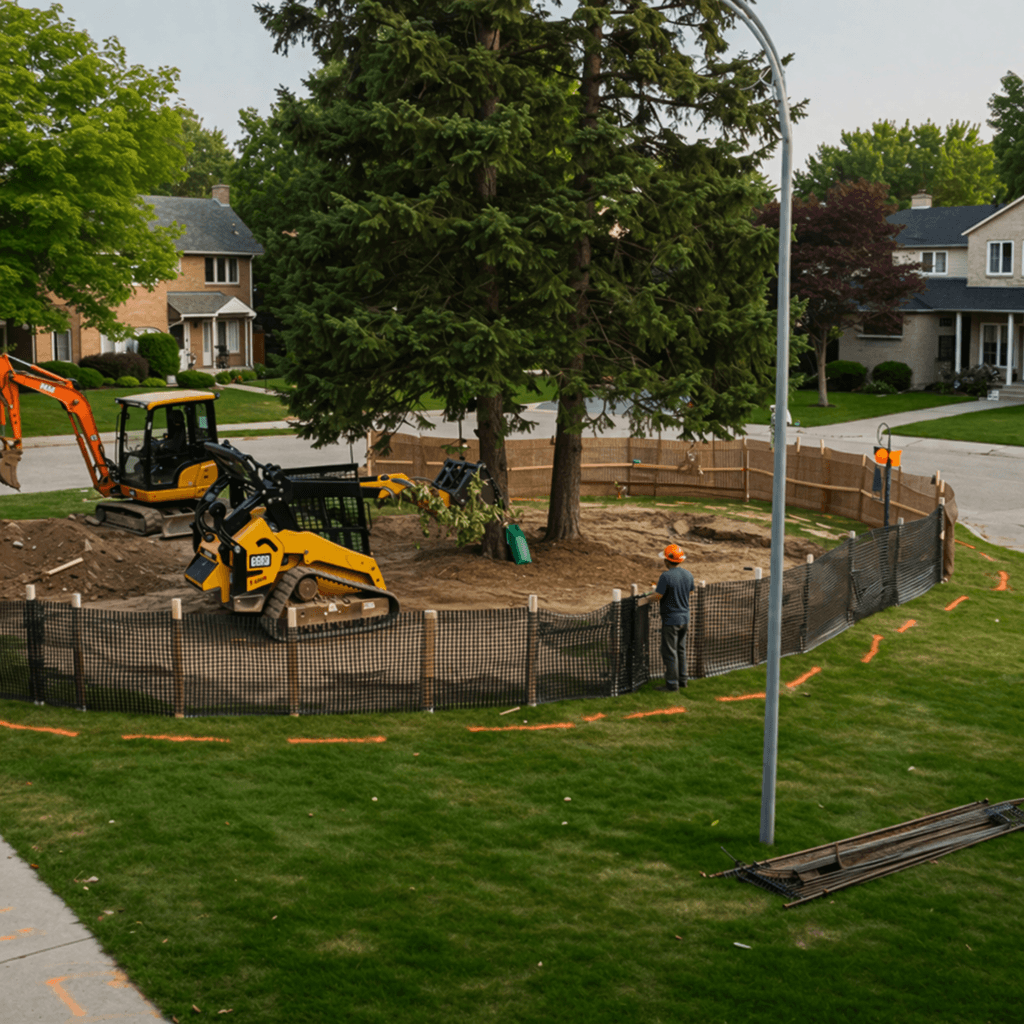
There is no virtue in saving every tree at all costs. Some trees are beyond practical mitigation. Some stand in the wrong place for their condition. Some have defects severe enough that removal is the most responsible recommendation. Tree Removal Services are a legitimate and necessary part of professional arboriculture.
What matters is whether the recommendation comes from informed judgment.
An ISA-credentialed professional should be able to explain why a tree is a removal candidate. That explanation might relate to structural failure risk, storm damage, unmanageable defects, or the inability to reduce risk to an acceptable level through pruning or support systems. The rationale should not rely on vague language such as “it just looks bad.” Clients deserve clearer reasoning than that.
There is also a practical side to removals that people tend to overlook. Once the tree is down, the site still has to function. That is where Stump Removal & Grinding often enters the conversation. Leaving a stump may be acceptable in a low-use area. In a lawn, near replanting zones, or where access and aesthetics matter, grinding usually makes more sense. A good arboricultural recommendation accounts for the whole site, not only the cutting phase.
The best removal decisions also preserve what can remain. In mixed landscapes, taking one failed or declining tree out may improve light, reduce competition, and give neighboring trees a better chance to thrive. Removal is not always a loss. Sometimes it is a reset that protects the broader planting.
Structural support can buy time, improve safety, and preserve value
Among the least appreciated tools in modern tree care are structural support systems. Tree Cable and Bracing are not catchall fixes, and they do not make a compromised tree risk-free. What they can do, in appropriate cases, is reduce the likelihood of failure or limit the extent of movement in weak unions and overextended structures.
This is another area where credentialed judgment matters. Installing support hardware without proper assessment can create false confidence. Recommending support when the tree is no longer a good candidate can delay a more honest decision. On the other hand, dismissing support options too quickly can lead to avoidable removals of valuable mature trees.
A trained arborist looks at whether the tree has a realistic future, whether the defect is suitable for mitigation, and whether pruning should accompany the support system. Structural support is rarely a standalone answer. It tends to work best as part of a broader management plan.
Clients often appreciate these options when the tree has sentimental, functional, or landscape value. A large shade tree near a patio, for example, may be worth preserving if the risk can be reduced responsibly. The key phrase is responsibly. Support systems are part of risk management, not magic hardware.
Fire-smart work is specialized, not generic
In fire-prone areas, tree care has another layer of complexity. FireSmart Tree Services are not just ordinary pruning with a different label. The work should reflect an understanding of how vegetation arrangement, crown structure, and site conditions influence wildfire exposure and defensible space.
The verified context here is modest, so it is important not to overstate specifics. Still, it is fair to say that trained tree professionals bring more nuance to this type of work than a purely cosmetic crew. They are more likely to think in terms of tree condition, separation, maintenance priorities, and the relationship between individual trees and the broader site.
That matters because rushed or uninformed cutting can create a landscape that is neither healthy nor better prepared. Fire-conscious tree work should still respect sound arboricultural practice. A poor cut remains a poor cut, even if the stated goal is wildfire readiness.
In those settings, Certified Arborist Consultation can be especially valuable. Property owners often need help balancing clearance objectives with long-term tree health. The right plan should reduce exposure where possible without turning the site into a collection of stressed, badly pruned trees.
Ethics show up in what professionals recommend you do not need
Most clients notice professionalism when a crew works neatly, arrives on time, and communicates well. Those things matter. Ethics often reveal themselves somewhere quieter: in the jobs a company talks itself out of.
An ISA credential includes adherence to a Code of Ethics, and that point deserves more attention than it gets. In practical terms, ethical practice means the arborist should not recommend unnecessary work just because the equipment is on site. They should not push removals where mitigation is reasonable. They should not promise absolute safety where none exists. They should not offer pruning that conflicts with accepted practice simply because the customer insists.
That does not mean every credentialed professional will make identical recommendations. Tree care includes judgment calls, and skilled arborists can disagree around the edges. One may favor moderate reduction while another prefers structural support with monitoring. One may consider a tree manageable for a few years, while another judges that the targets below make removal the better option now. Those are real-world differences in professional interpretation, not proof that the credential has no value.
The value lies in the framework behind the recommendation. When professionals are operating from the same body of training, standards awareness, and ethical obligations, the conversation becomes more disciplined and more useful.
What property owners should listen for during an arborist visit
The easiest way to tell whether you are getting thoughtful tree care is not by listening for fancy terminology. It is by paying attention to how the professional reasons through the problem.
A strong consultation usually includes a few recognizable traits:
- The arborist explains conditions they observe, not just the service they want to sell.
- They distinguish between tree health issues and tree risk issues.
- They discuss management options, including when no immediate work is needed.
- They describe limits honestly, including the fact that no tree is completely risk-free.
- They connect recommendations to site use, targets, and long-term maintenance.
That last point matters more than many people realize. Trees do not exist in isolation. A branch over a fence is one issue. That same branch over a playground, entry path, or parked vehicles is another. Good professionals tie their recommendations to how the space is actually used.
Why the credential matters across the full range of services
When people think about ISA credentials, they often connect them only to diagnosis or consulting. The benefit is broader than that. It runs through the whole service line.
With Tree Pruning & Crown Shaping, the benefit is better cuts, better structure, and a stronger defense against harmful practices such as topping and stub cuts. With Dangerous Tree Assessment and Removal, the benefit is a systematic approach to risk rather than a snap judgment. With Tree Removal Services, it is a better chance that removal will be recommended for sound reasons and performed with a clear sense of what the site needs afterward. With Stump Removal & Grinding, it is a more complete view of restoration and future use.
The same is true in higher-pressure situations. Emergency Tree Services demand calm sequencing and informed control when damaged trees are unstable. Tree Cable and Bracing require careful selection, not blanket application. FireSmart Tree Services benefit from professionals who can balance risk reduction with sound tree care principles. Across all of those categories, Certified Arborist Consultation helps clients make decisions they can defend months and years later.
That is the practical value of credentialed expertise. It does not reduce tree care to a checklist. It improves the quality of judgment where checklists fall short.
The real benefit is confidence grounded in competence
Property owners do not hire tree professionals because they want abstract reassurance. They hire them because they need help making expensive, high-stakes decisions around living structures that can outlast buildings or fail in seconds.
An ISA-credentialed professional brings a stronger foundation to those decisions. Training in the art and science of tree care matters. Passing a comprehensive exam matters. Continuing education matters. A Code of Ethics matters. Each piece supports a more reliable standard of practice in a field where poor work can have lasting consequences.
Sometimes that means preserving a tree through careful pruning and monitoring. Sometimes it means installing support systems to reduce the chance of failure. Sometimes it means acting quickly during an emergency, with discipline rather than panic. And sometimes it means recommending removal because no responsible mitigation remains.
The point is not that every tree should be saved or every risk should be eliminated. Neither is realistic. The point is that tree care deserves professional judgment equal to the complexity of the job. ISA-credentialed professionals are valuable because they bring that judgment to the work, cut by cut, call by call, tree by tree.
Name: Ace Tree Services Ltd.
Address: 4656 Wallace Hill Road, Kelowna, BC
Phone: 250-212-9593
Website: https://acetree.ca/
Hours:
Monday: 7:00 AM–5:00 PM
Tuesday: 7:00 AM–5:00 PM
Wednesday: 7:00 AM–5:00 PM
Thursday: 7:00 AM–5:00 PM
Friday: 7:00 AM–5:00 PM
Saturday: 7:00 AM–5:00 PM
Sunday: Closed
Emergency tree services: 24/7 emergency service is listed.
Open-location code / Plus code: RHF8+8G Kelowna, British Columbia, Canada
Map/listing URL: https://www.google.com/maps/place/Ace+Tree+Services+Ltd./@49.8232606,-119.4337283,563m/data=!3m1!1e3!4m6!3m5!1s0x537d8b1d074815c5:0x450b88afa7a41435!8m2!3d49.8232606!4d-119.4337283!16s%2Fg%2F11ydkpnh22
Embed iframe:
Socials: https://www.facebook.com/people/Ace-Tree-Services/61585901931447/
https://m.yelp.com/biz/ace-tree-services-kelowna
Ace Tree Services Ltd. provides professional tree service for residential, commercial, and municipal customers in Kelowna and across the Okanagan Valley.
The company’s listed services include tree removal, stump removal and grinding, tree pruning and crown shaping, emergency tree services, certified arborist consultation, dangerous tree assessment, tree cable and bracing, and wildfire mitigation.
Ace Tree Services works with homeowners, businesses, property managers, and public-sector clients that need safe, practical tree care in the Kelowna area.
The official site highlights ISA-certified arborists, insurance, and experience handling both routine and complex tree service situations.
Customers can contact Ace Tree Services for tree care planning, hazard concerns, emergency tree cleanup, pruning needs, stump grinding, or advice about trees near homes, fences, driveways, and landscaping.
Ace Tree Services lists regular work hours from 7:00 AM to 5:00 PM Monday through Friday, with 24/7 emergency tree service available for urgent situations.
For tree service in Kelowna, call 250-212-9593 or visit https://acetree.ca/
The public map listing places Ace Tree Services Ltd. in Kelowna and can help customers find directions to the Wallace Hill Road area.
Popular Questions About Ace Tree Services Ltd.
What services does Ace Tree Services Ltd. provide?
Ace Tree Services Ltd. provides tree removal, stump removal and grinding, tree pruning and crown shaping, emergency tree services, certified arborist consultation, dangerous tree assessment and removal, tree cable and bracing, and wildfire mitigation.
Where is Ace Tree Services Ltd. located?
The official website lists Ace Tree Services Ltd. at 4656 Wallace Hill Road, Kelowna, BC.
What areas does Ace Tree Services Ltd. serve?
The official website describes Ace Tree Services as located in Kelowna and servicing the Okanagan.
What phone number should customers call?
Customers can call Ace Tree Services Ltd. at 250-212-9593.
What are Ace Tree Services Ltd.’s regular hours?
The official website lists work hours as 7:00 AM to 5:00 PM, Monday through Friday. Saturday and Sunday regular hours are not listed and should be confirmed directly.
Does Ace Tree Services Ltd. offer emergency tree service?
Yes. The official website lists 24/7 emergency services for urgent tree situations, including emergency tree removal, dangerous tree assessment, stabilization, and limb or branch cleanup.
Does Ace Tree Services Ltd. have certified arborists?
Yes. The official website states that Ace Tree Services has ISA-certified arborists.
Can Ace Tree Services Ltd. help with wildfire mitigation?
Yes. Wildfire mitigation is listed as one of the company’s tree services.
How do I contact Ace Tree Services Ltd.?
Call 250-212-9593 or visit https://acetree.ca/.
Landmarks Near Kelowna, BC
Wallace Hill Road: A local Kelowna road near the address listed for Ace Tree Services Ltd.
Okanagan Lake: A major Kelowna landmark near residential, commercial, and waterfront properties that may need tree pruning, removal, or hazard assessment.
Downtown Kelowna: A central area with homes, offices, rental properties, restaurants, and commercial sites that may need professional tree care.
Mission / Lower Mission: A well-known Kelowna area with mature landscaping, residential properties, and lake-adjacent homes.
South East Kelowna: A rural and residential area with larger properties, orchards, and tree-care needs that can include pruning, removals, and wildfire mitigation.
Crawford: A residential area near the southeast side of Kelowna where homeowners may need tree trimming, hazard assessment, and stump grinding.
Kettle Valley: A hillside residential neighborhood where tree condition, slope, wind exposure, and defensible-space planning can matter for property owners.
Myra-Bellevue Provincial Park: A major outdoor landmark near southeast Kelowna and a useful point of orientation for nearby properties.
Gallagher’s Canyon: A residential and golf community near southeast Kelowna where tree maintenance and wildfire-conscious vegetation management can be practical concerns.
Orchard Park Shopping Centre: A major central Kelowna retail landmark and reference point for customers traveling across the city.
Highway 97: A major Kelowna corridor connecting neighborhoods, commercial properties, and service routes throughout the region.
Kelowna City Park: A recognizable central landmark near downtown neighborhoods and lakefront properties.
Glenmore: A Kelowna neighborhood with residential and commercial properties that may need pruning, storm cleanup, and general tree care.
Rutland: A large residential and commercial area where customers may need tree removal, pruning, stump grinding, or arborist consultation.
Black Mountain: A hillside community where slope, wind, wildfire exposure, and access can influence tree service planning.
For tree service near these Kelowna landmarks, contact Ace Tree Services Ltd. at 250-212-9593 or visit https://acetree.ca/