What to Expect From a Certified Arborist Consultation
If you have never scheduled a Certified Arborist Consultation before, it helps to know that a good visit is not just a quick look at a tree and a quote for cutting it down. A qualified arborist is there to assess trees as living structures, evaluate condition and risk, and recommend practical next steps based on training, field judgment, and accepted tree care practices.
That distinction matters. Homeowners often call because something feels off. A limb has started sagging over the driveway. A trunk is leaning farther than it used to. Storm season is approaching. A stump from an old removal is still in the way. Sometimes the concern is safety. Sometimes it is appearance. Sometimes it is a broader property question, such as wildfire readiness or whether a mature tree can be preserved during nearby work.
A certified arborist should approach those concerns methodically. The consultation is where that process starts.
Why certification changes the conversation
Tree work is one of those trades where confidence can be misleading. Plenty of people can operate a saw. Far fewer can explain why one tree should be pruned, another monitored, and a third removed. Certification matters because it signals formal knowledge of the art and science of tree care, successful completion of a comprehensive exam, ongoing education, and a professional code of ethics.
That does not mean every consultation ends with a perfect or simple answer. Trees are biological structures exposed to weather, soil limits, mechanical stress, and age. There is no completely safe tree. An experienced arborist knows that the real goal is not to promise zero risk, because that would be false. The goal is to identify the level of concern, explain the trade-offs, and recommend measures that reduce unnecessary risk without defaulting to unnecessary intervention.
You can usually feel the difference within the first few minutes. A sales-driven visit tends to start with the saw. A professional consultation starts with questions.
The first part of the visit is usually about your concerns
Expect the arborist to ask what prompted the appointment. That sounds basic, but it shapes the assessment. A tree that looks ordinary from the street may be the one that drops branches in every windstorm. A tree that appears dramatic may have been stable in that position for years. Context matters.
You may be asked when you first noticed the issue, whether there has been recent storm damage, whether construction or grade changes happened nearby, and what sits within striking distance of the tree. A branch over open lawn is not the same problem as a branch over a child’s play area, a parked vehicle, a roofline, or a public sidewalk. Risk is not just about the defect in the tree. It is also about what could be hit and how often that target is present.
This part of the conversation is also where goals come into focus. Some clients want to retain a mature tree if there is a defensible way to do it. Others are planning a renovation and want clarity on whether removal is inevitable. Others are trying to compare Tree Pruning & Crown Shaping with full Tree Removal Services. A good arborist listens first, then explains what is realistic.
What the arborist is actually looking at
Most consultations rely heavily on visual assessment. That does not mean a casual glance. It means a systematic look from the ground, and sometimes from multiple angles, at the whole tree and the site around it.
The arborist will typically consider the crown, trunk, branch structure, root zone, and nearby targets. They may look for deadwood, broken limbs, weak branch attachments, imbalanced growth, signs of storm damage, or evidence that previous pruning was poorly executed. Improper cuts, topping, and stub cuts can create long-term structural and health problems, so past work often tells an important story.
The structure of the crown matters more than many property owners realize. A dense, overextended crown can create leverage in wind. Poor branch spacing can increase the chance of failure. On the other hand, not every irregularity is a crisis. Mature trees often have asymmetry, old wounds, or unusual habits that look alarming to the untrained eye but do not always justify aggressive action.
This is one reason a professional consultation can save money and prevent avoidable damage. People tend to assume the only serious answer is removal. In practice, the recommendation may be selective pruning, weight reduction in a specific part of the crown, structural support, or monitoring.
Risk assessment is not guesswork
One of the most useful parts of a Certified Arborist Consultation is the discussion of risk. Arborists are trained to approach tree risk assessment as a systematic process. They identify concerns, analyze what those concerns could lead to, and evaluate whether action is needed to reach an acceptable level of risk.
That phrase, acceptable level of risk, is important. It reflects real-world decision-making. A tree beside a back fence in a low-use corner of a property presents a different level of concern than a tree leaning over a main entrance. The same defect can carry different urgency depending on occupancy, access, and consequences if failure occurs.
When people hear the term Dangerous Tree Assessment and Removal, they often imagine a dramatic, obviously failing tree. Sometimes that is the case. More often, the decision is more nuanced. The arborist may explain that the tree has defects that increase the likelihood of failure, but that the risk can be reduced through Tree Pruning & Crown Shaping or Tree Cable and Bracing rather than immediate removal. In other situations, especially where high-value targets are involved, removal may be the prudent choice even if the tree is still standing and leafing out.
Good consultants do not use fear to force the decision. They explain the problem in plain language, tie it to the site conditions, and separate urgent concerns from manageable ones.
You should expect practical recommendations, not vague advice
By the end of the consultation, you should have a clearer sense of what work is advisable and why. That may include immediate safety work, routine maintenance, or a plan to revisit the tree later.
Common recommendations may include:
- Tree Pruning & Crown Shaping to remove dead, broken, or poorly attached limbs and improve structure.
- Tree Cable and Bracing when structural support may help reduce stress on vulnerable unions or stems.
- Dangerous Tree Assessment and Removal when the level of risk cannot be reduced to a reasonable level through other measures.
- Stump Removal & Grinding if an old stump is creating a use, access, or landscape problem after prior removal.
- FireSmart Tree Services to address vegetation concerns where wildfire exposure is part of the property planning discussion.
Notice what is missing from that list: one-size-fits-all solutions. A serious arborist should match the recommendation to the actual condition of the tree and the targets around it.
There is also a difference between pruning for structure and pruning for appearance. Homeowners sometimes request heavy thinning or drastic cutting because they want more light or less leaf drop. A trained arborist should be able to explain when aesthetic goals can be accommodated and when they conflict with sound pruning practice. Proper branch removal and reduction cuts matter. Topping and other improper techniques may create a quick visual change, but they often lead to poor regrowth, weak structure, and recurring problems.
Sometimes the right answer is not removal
Many people schedule a consultation assuming they need Tree Removal Services. Sometimes they do. Large tree removals can be dangerous work and should be handled by trained and properly equipped professionals. But one of the signs of a thoughtful consultation is that removal is not treated as the default answer.
On a structurally compromised tree with a high-value target beneath it, removal can be the responsible recommendation. On another tree, a combination of selective pruning and support may preserve both safety and canopy value. Trees contribute shade, screening, and landscape presence that take years to replace. A certified arborist should weigh those benefits against the risks and maintenance realities.
This is especially true with mature specimens. A large tree may look imposing after a storm simply because broken hangers are visible from the ground. Once those are addressed and the crown is properly evaluated, the tree may still be a good candidate for retention. In other cases, what looked like minor damage from one side reveals a much more serious structural concern from another angle. That is why the consultation matters. It replaces assumption with informed judgment.
Emergency calls are handled differently
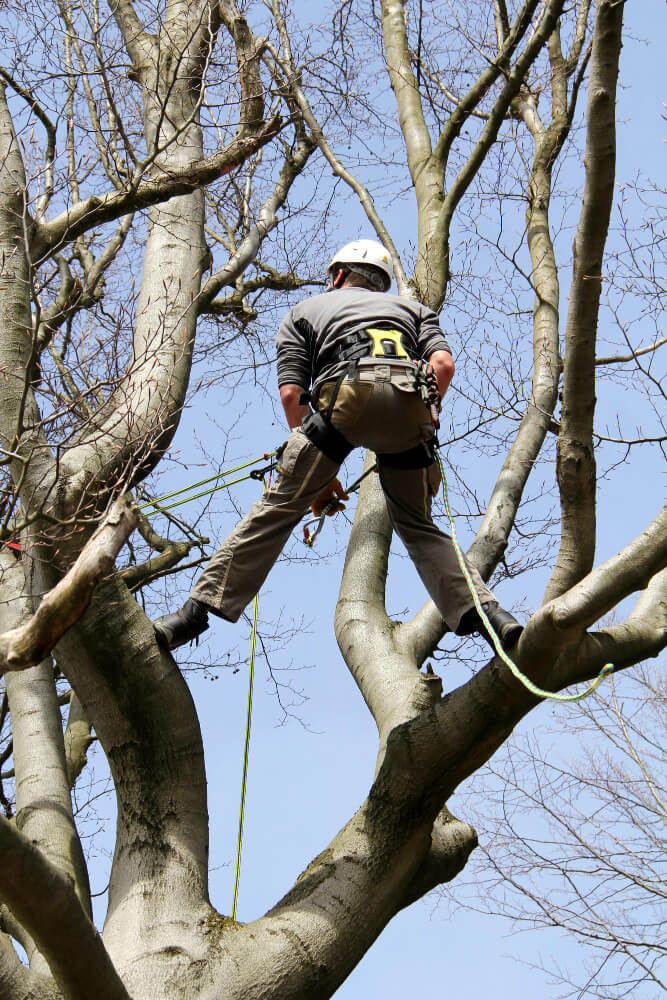
If you are seeking Emergency Tree Services after a storm or sudden limb failure, the consultation may be shorter and more focused on immediate hazards. The arborist still uses professional judgment, but the priority shifts to safety, site control, and stabilization.
In those situations, expect the discussion to center on what must be addressed right away and what can wait until access and conditions improve. A partially failed tree over a driveway is one kind of urgency. A damaged tree in an area that can be isolated may allow more time for measured decisions. Emergency work often involves restoring safe access and preventing further damage, then returning later for more complete pruning, structural correction, or removal.
This is one of the moments when clients most appreciate a calm, experienced voice. Panic leads to bad decisions. Professional arborists know that emergency response and emergency service restoration require both urgency and restraint.
Fire risk may be part of the conversation
In some regions or on certain properties, FireSmart Tree Services come up during consultations even when the original concern is not wildfire. A certified arborist may look at spacing, crown conditions, and site layout through that lens if fire exposure is relevant to the property.
That does not automatically mean removing large numbers of trees. Often the goal is to reduce vulnerability through thoughtful maintenance rather than indiscriminate clearing. The consultation should help you understand where tree retention, pruning, and selective removal support the broader safety objective.
The most useful discussions here are the ones that avoid extremes. Total neglect is not a strategy. Neither is unnecessary stripping of the landscape. A professional should explain where practical tree care and fire-conscious planning overlap.
What to have ready before the appointment
You do not need to become a tree expert before the arborist arrives, but a little preparation makes the visit more productive.
- Be ready to point out the exact trees or limbs that concern you.
- Note any recent storms, visible changes, or previous tree work on the property.
- Mention planned construction, excavation, or access changes near the trees.
- Identify areas where people, vehicles, roofs, or utility access are affected.
- If you are deciding between preservation and removal, say that plainly.
Those details help the arborist assess risk in context and tailor recommendations to your priorities.
The consultation should feel educational
One of the best outcomes of a Certified Arborist Consultation is that you leave understanding your trees better, even if you do not authorize work on the spot. The arborist should be able to explain what they see in straightforward terms. You should not have to decode jargon or accept vague statements like “it just doesn’t look good.”
A useful explanation might sound more like this: the tree has extended growth on one side, the branch attachment in that section appears weak, and the limb is positioned over a regularly occupied target, so reduction pruning may lower the load and reduce the chance of failure. Or, the tree has multiple structural concerns in combination with a high-consequence target, so removal is the more defensible option.
That level of explanation builds trust because it shows reasoning. It also helps when you are comparing proposals. If one company pushes immediate removal and another recommends mitigation, you need enough understanding to ask why.
What happens after the assessment
After the consultation, you may receive a recommended scope of work. Depending on the situation, that could involve maintenance pruning, risk reduction pruning, support installation, monitored follow-up, stump work, or removal. If a tree has already been removed or must be removed, Stump Removal & Grinding may be discussed separately because the stump itself poses different practical issues than the tree above it.
Not every recommendation needs to happen the same day. Some issues are urgent. Others are seasonal or can be phased. A sound arborist should distinguish between immediate hazards and routine tree care. That helps you prioritize budget and timing without neglecting legitimate safety concerns.
It is also fair to ask what result the proposed work is meant to achieve. Good tree care is outcome-based. If pruning is recommended, you should understand whether the purpose is clearance, structure, risk reduction, or crown management. If Tree Cable and Bracing is suggested, you should understand that the objective is structural support, not a guarantee against all future failure. If removal is advised, the arborist should be able to explain why other measures are not likely to reduce risk adequately.
A consultation is not the same as a sales estimate
This is worth saying plainly because many property owners have experienced both. A fast estimate often answers only one question: how much to cut. A Certified Arborist Consultation should answer a more valuable set of questions: what is happening with the tree, how serious is it, what options exist, and what trade-offs come with each option?
That broader perspective matters across the full range of services. Tree Removal Services may be necessary. Emergency Tree Services may be urgent. Tree Pruning & Crown Shaping may protect a valuable tree from becoming a larger problem. Dangerous Tree Assessment and Removal may clarify whether a tree is actually unsafe or simply neglected. Tree Cable and Bracing may preserve a structure that still has years of value. FireSmart Tree Services may fit into a larger property safety plan. Stump Removal & Grinding may be the final step after dangerous tree emergency removal a removal decision is made.
When the consultation is done well, all of those services sit inside a single professional framework: assess first, explain clearly, recommend responsibly, and act safely.
What a good consultation leaves you with
By the time the visit ends, you should know more than whether a crew can do the work. You should understand the condition of the tree in practical terms. You should know whether the main issue is health, structure, target exposure, storm damage, prior poor pruning, or a combination of those factors. You should have a reasoned recommendation, not just a sales pitch.
That is the real value of bringing in a certified arborist. Trees are long-lived assets, but they are also dynamic, imperfect structures. Managing them well requires more than equipment. It requires judgment. A strong consultation gives you that judgment up front, before a branch fails, before unnecessary work is done, and before a preventable problem becomes an expensive one.
Name: Ace Tree Services Ltd.
Address: 4656 Wallace Hill Road, Kelowna, BC
Phone: 250-212-9593
Website: https://acetree.ca/
Hours:
Monday: 7:00 AM–5:00 PM
Tuesday: 7:00 AM–5:00 PM
Wednesday: 7:00 AM–5:00 PM
Thursday: 7:00 AM–5:00 PM
Friday: 7:00 AM–5:00 PM
Saturday: 7:00 AM–5:00 PM
Sunday: Closed
Emergency tree services: 24/7 emergency service is listed.
Open-location code / Plus code: RHF8+8G Kelowna, British Columbia, Canada
Map/listing URL: https://www.google.com/maps/place/Ace+Tree+Services+Ltd./@49.8232606,-119.4337283,563m/data=!3m1!1e3!4m6!3m5!1s0x537d8b1d074815c5:0x450b88afa7a41435!8m2!3d49.8232606!4d-119.4337283!16s%2Fg%2F11ydkpnh22
Embed iframe:
Socials: https://www.facebook.com/people/Ace-Tree-Services/61585901931447/
https://m.yelp.com/biz/ace-tree-services-kelowna
Ace Tree Services Ltd. provides professional tree service for residential, commercial, and municipal customers in Kelowna and across the Okanagan Valley.
The company’s listed services include tree removal, stump removal and grinding, tree pruning and crown shaping, emergency tree services, certified arborist consultation, dangerous tree assessment, tree cable and bracing, and wildfire mitigation.
Ace Tree Services works with homeowners, businesses, property managers, and public-sector clients that need safe, practical tree care in the Kelowna area.
The official site highlights ISA-certified arborists, insurance, and experience handling both routine and complex tree service situations.
Customers can contact Ace Tree Services for tree care planning, hazard concerns, emergency tree cleanup, pruning needs, stump grinding, or advice about trees near homes, fences, driveways, and landscaping.
Ace Tree Services lists regular work hours from 7:00 AM to 5:00 PM Monday through Friday, with 24/7 emergency tree service available for urgent situations.
For tree service in Kelowna, call 250-212-9593 or visit https://acetree.ca/
The public map listing places Ace Tree Services Ltd. in Kelowna and can help customers find directions to the Wallace Hill Road area.
Popular Questions About Ace Tree Services Ltd.
What services does Ace Tree Services Ltd. provide?
Ace Tree Services Ltd. provides tree removal, stump removal and grinding, tree pruning and crown shaping, emergency tree services, certified arborist consultation, dangerous tree assessment and removal, tree cable and bracing, and wildfire mitigation.
Where is Ace Tree Services Ltd. located?
The official website lists Ace Tree Services Ltd. at 4656 Wallace Hill Road, Kelowna, BC.
What areas does Ace Tree Services Ltd. serve?
The official website describes Ace Tree Services as located in Kelowna and servicing the Okanagan.
What phone number should customers call?
Customers can call Ace Tree Services Ltd. at 250-212-9593.
What are Ace Tree Services Ltd.’s regular hours?
The official website lists work hours as 7:00 AM to 5:00 PM, Monday through Friday. Saturday and Sunday regular hours are not listed and should be confirmed directly.
Does Ace Tree Services Ltd. offer emergency tree service?
Yes. The official website lists 24/7 emergency services for urgent tree situations, including emergency tree removal, dangerous tree assessment, stabilization, and limb or branch cleanup.
Does Ace Tree Services Ltd. have certified arborists?
Yes. The official website states that Ace Tree Services has ISA-certified arborists.
Can Ace Tree Services Ltd. help with wildfire mitigation?
Yes. Wildfire mitigation is listed as one of the company’s tree services.
How do I contact Ace Tree Services Ltd.?
Call 250-212-9593 or visit https://acetree.ca/.
Landmarks Near Kelowna, BC
Wallace Hill Road: A local Kelowna road near the address listed for Ace Tree Services Ltd.
Okanagan Lake: A major Kelowna landmark near residential, commercial, and waterfront properties that may need tree pruning, removal, or hazard assessment.
Downtown Kelowna: A central area with homes, offices, rental properties, restaurants, and commercial sites that may need professional tree care.
Mission / Lower Mission: A well-known Kelowna area with mature landscaping, residential properties, and lake-adjacent homes.
South East Kelowna: A rural and residential area with larger properties, orchards, and tree-care needs that can include pruning, removals, and wildfire mitigation.
Crawford: A residential area near the southeast side of Kelowna where homeowners may need tree trimming, hazard assessment, and stump grinding.
Kettle Valley: A hillside residential neighborhood where tree condition, slope, wind exposure, and defensible-space planning can matter for property owners.
Myra-Bellevue Provincial Park: A major outdoor landmark near southeast Kelowna and a useful point of orientation for nearby properties.
Gallagher’s Canyon: A residential and golf community near southeast Kelowna where tree maintenance and wildfire-conscious vegetation management can be practical concerns.
Orchard Park Shopping Centre: A major central Kelowna retail landmark and reference point for customers traveling across the city.
Highway 97: A major Kelowna corridor connecting neighborhoods, commercial properties, and service routes throughout the region.
Kelowna City Park: A recognizable central landmark near downtown neighborhoods and lakefront properties.
Glenmore: A Kelowna neighborhood with residential and commercial properties that may need pruning, storm cleanup, and general tree care.
Rutland: A large residential and commercial area where customers may need tree removal, pruning, stump grinding, or arborist consultation.
Black Mountain: A hillside community where slope, wind, wildfire exposure, and access can influence tree service planning.
For tree service near these Kelowna landmarks, contact Ace Tree Services Ltd. at 250-212-9593 or visit https://acetree.ca/